What Causes It Around Here
Nineteen miles is a real number when a spring breaks on a Tuesday morning
It's far enough that we build the Newark stop into the route rather than treat it as a quick add-on, and it's close enough that we can still get there the same day in most cases. That drive shapes how the call runs: we load the truck knowing what kind of door we're likely to meet before we ever get off the highway.
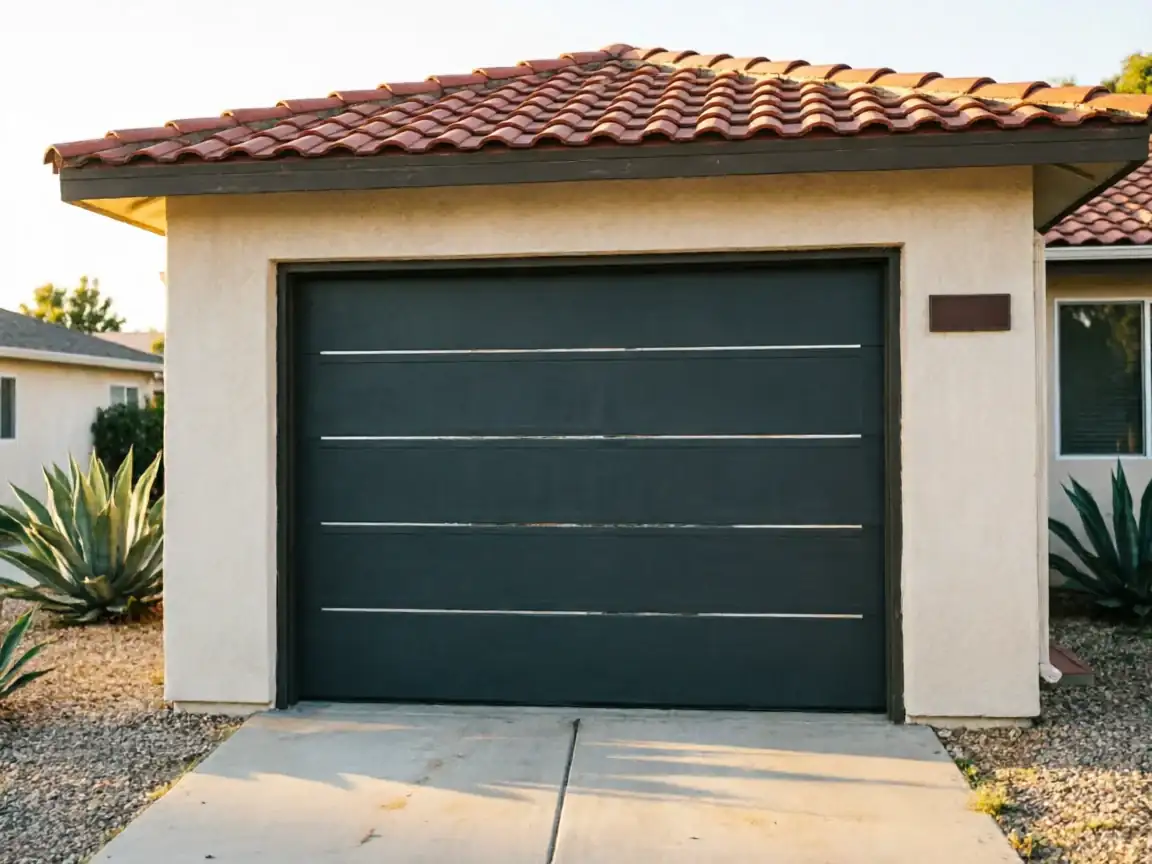
Most houses in Newark went up around 1975
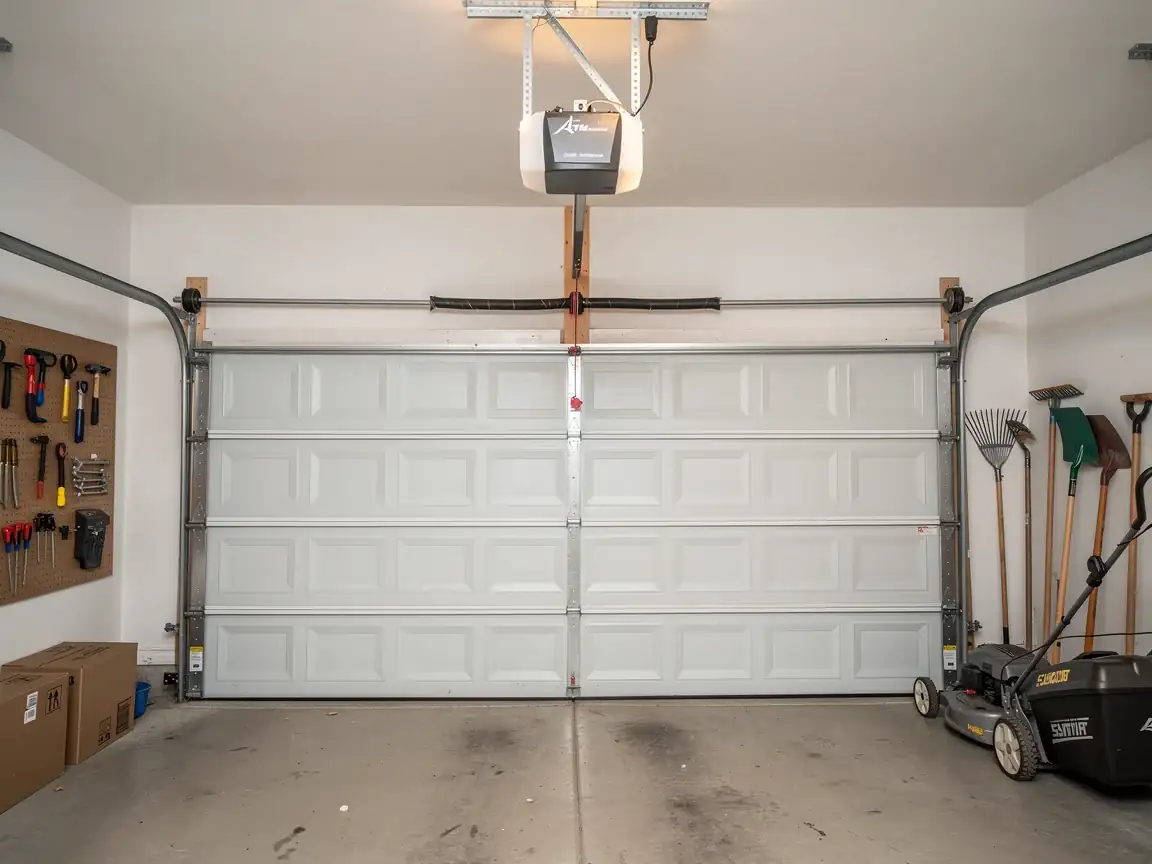
Which puts the neighborhood squarely in the same build wave that produced a lot of the service area's torsion-spring, steel-panel doors rather than the older one-piece tilt-up doors you'd find on pre-1960s stock. By 1975, torsion hardware above the opening was standard, but openers were often added later as aftermarket units, which means mismatched brackets and reinforcement that wasn't engineered together. The region's climate band is mild with occasional freeze risk, so you don't get the thermal cracking of a harsh winter market, but you do get decades of thermal cycling that dries out lubrication and loosens hinges on doors that are now approaching fifty years old. That combination - original torsion springs from a 1975 install, a bolted-on opener from sometime in the '90s - is the single most common reason we get a call from this stretch of town.
The Cost of This Job
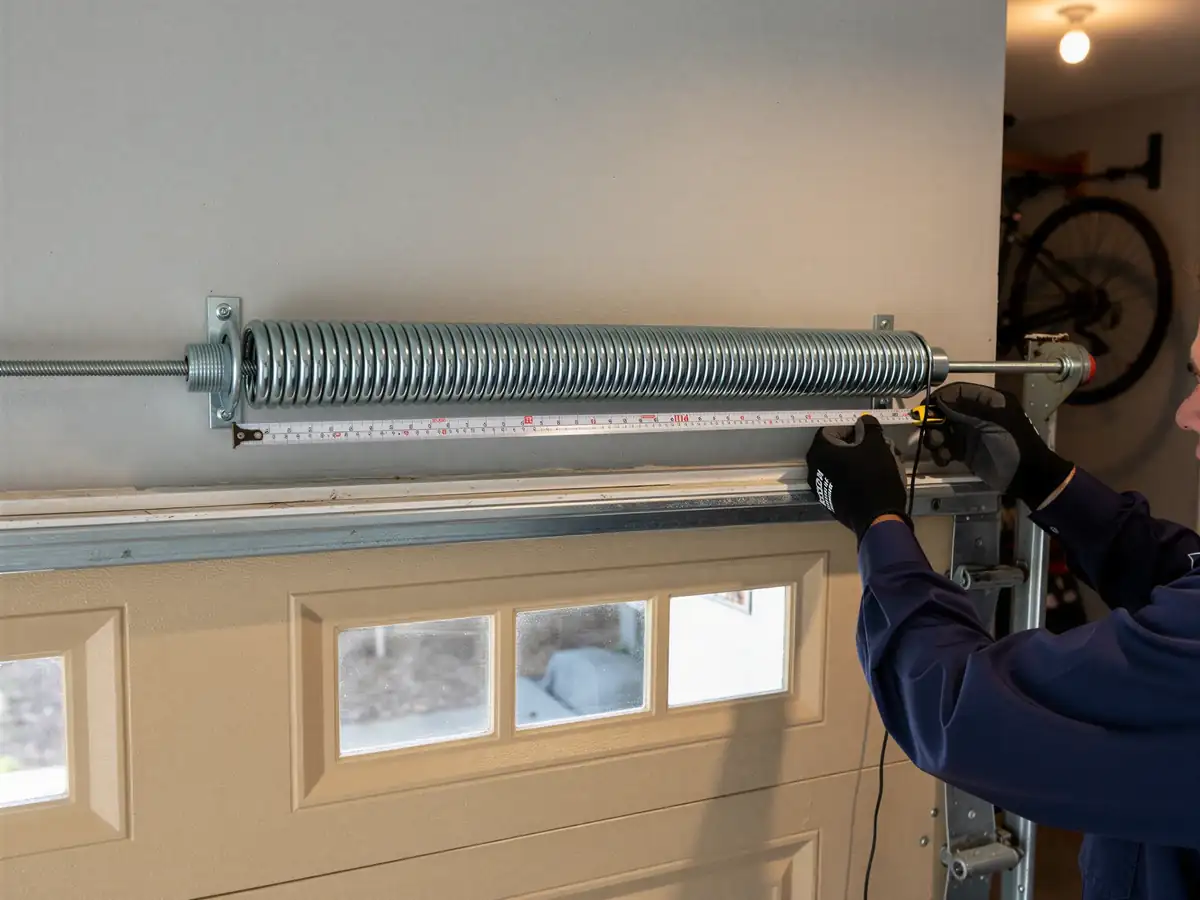
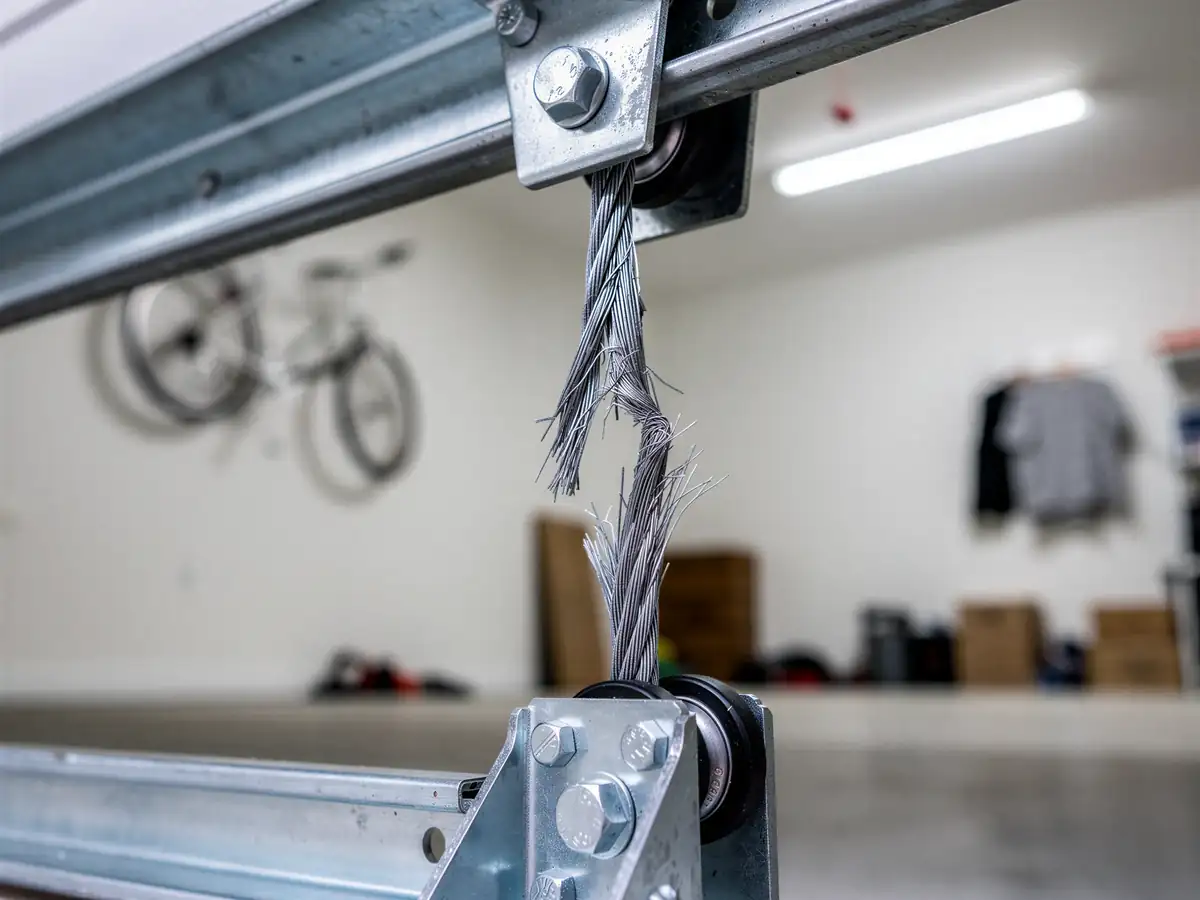
We don't quote a Newark-specific price here, because the number depends on what's actually broken, not on the town. What we can tell you is what tends to drive the bill on a house from this era: a torsion spring replacement on a door this age usually also needs new cable and sometimes new end bearings, because none of those parts is original-spec anymore after fifty years of cycling. Median household income in the broader service area runs well above $140,000, and Newark's own figure sits even higher at $164,909 - which matters less for what you'll pay and more for the fact that homes at this income level tend to carry two-car, heavier steel doors rather than lighter single doors, and heavier doors need heavier springs. That's the real cost driver: door weight, not zip code.
Can You Do This Yourself
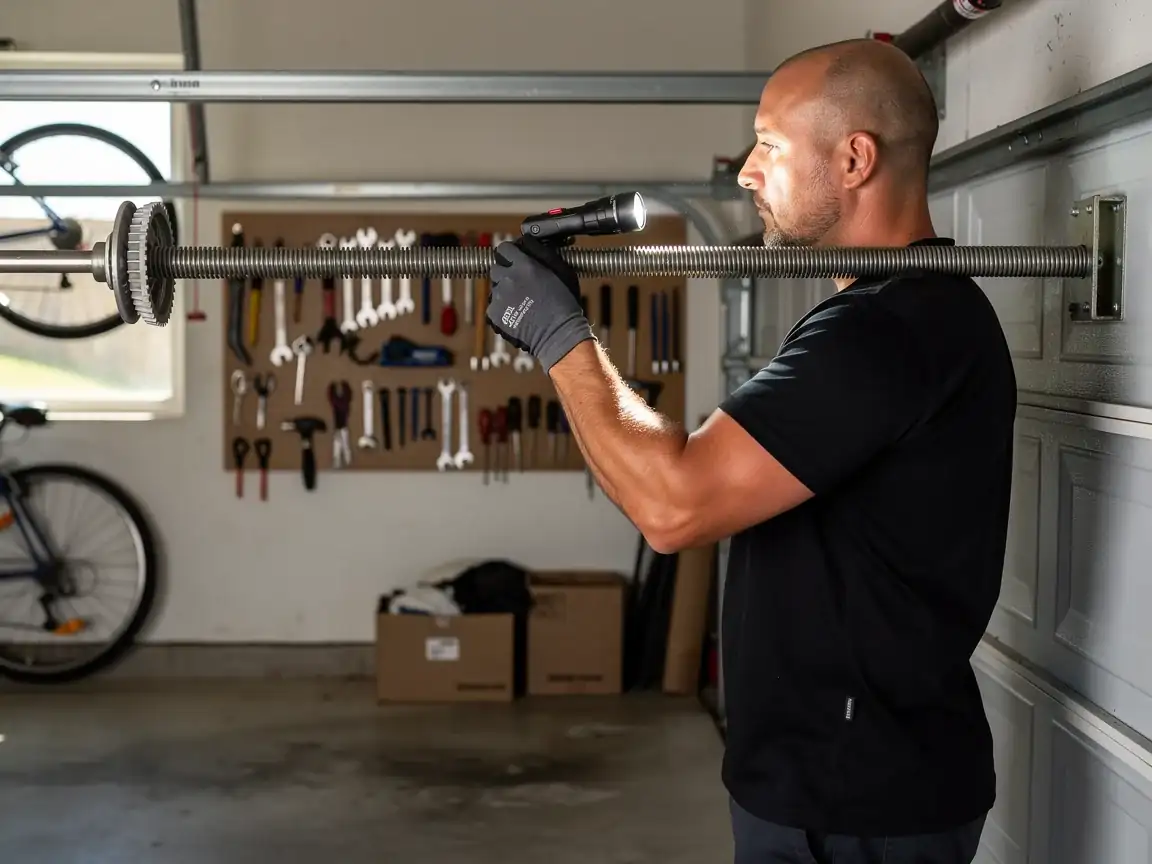
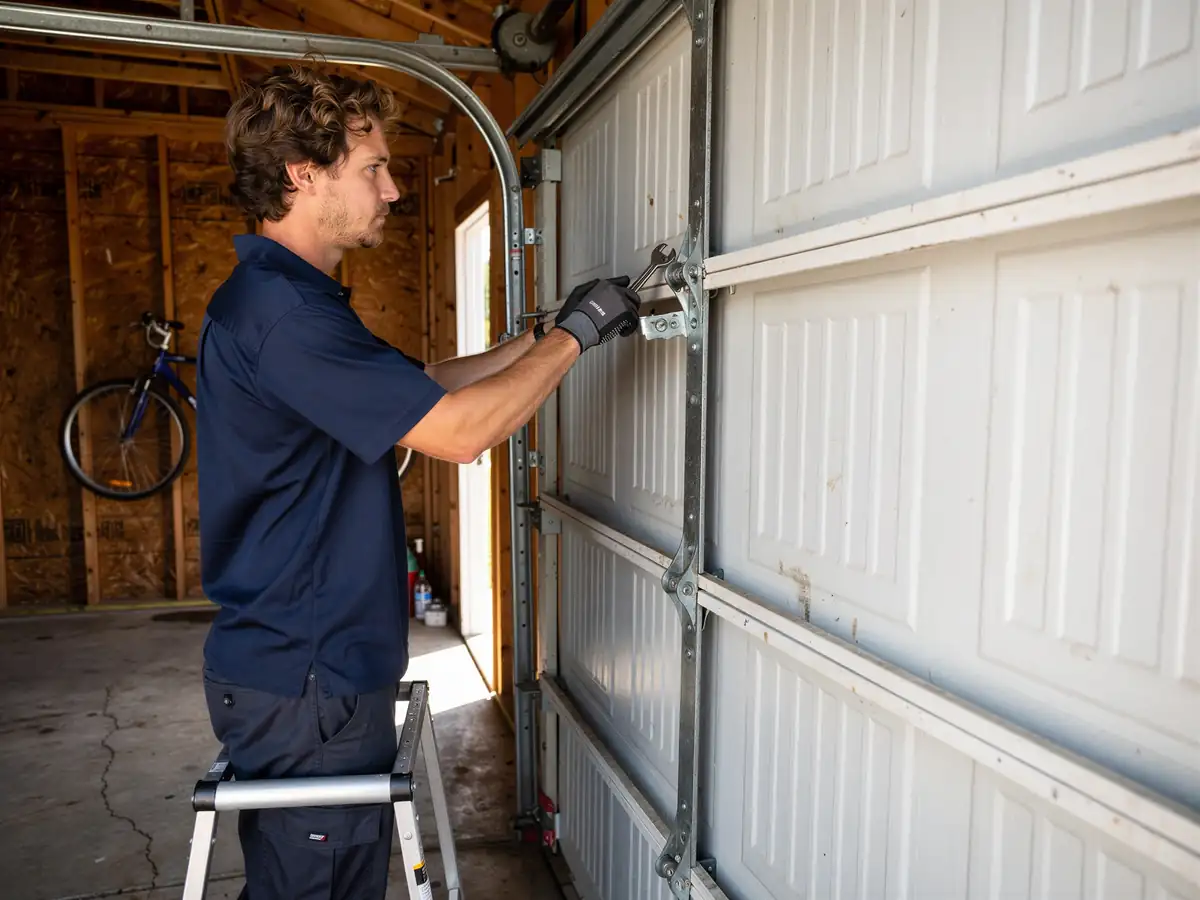
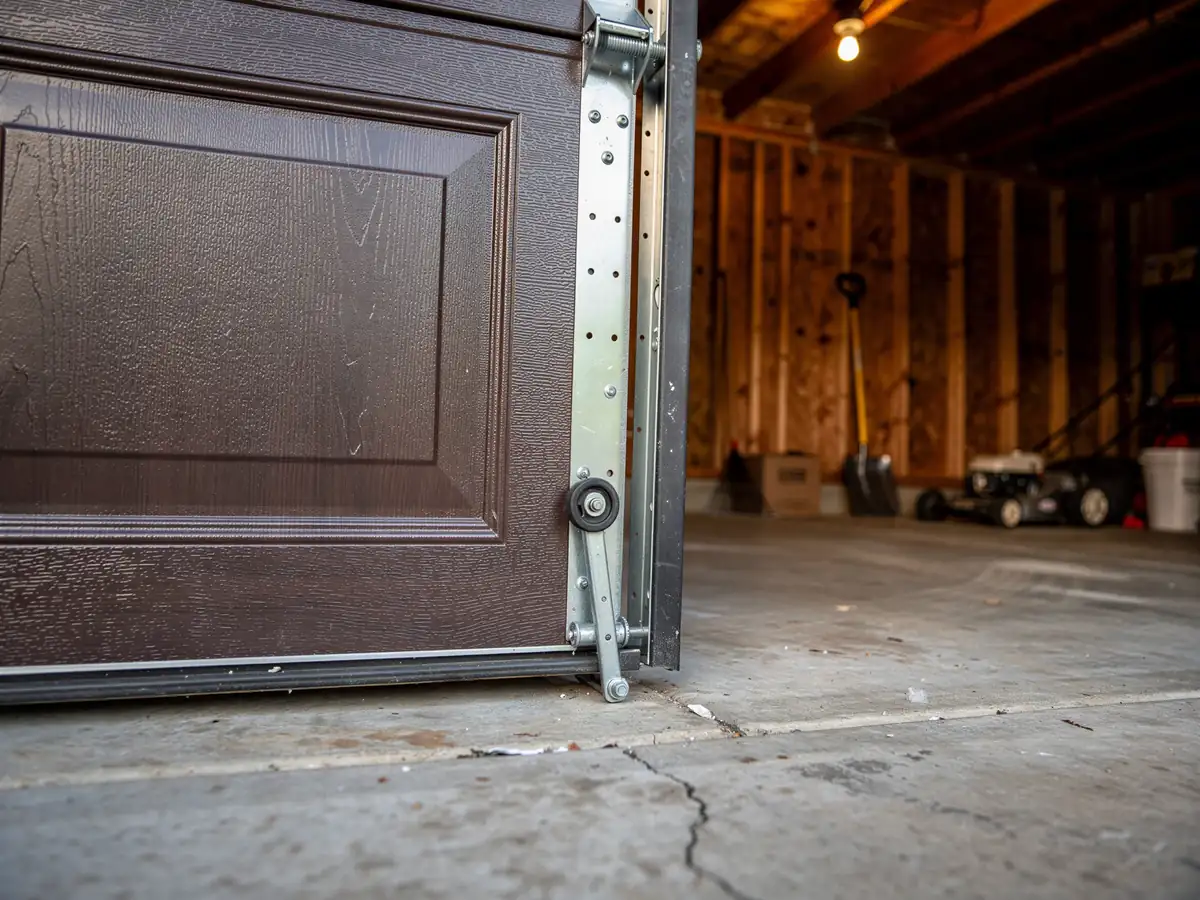
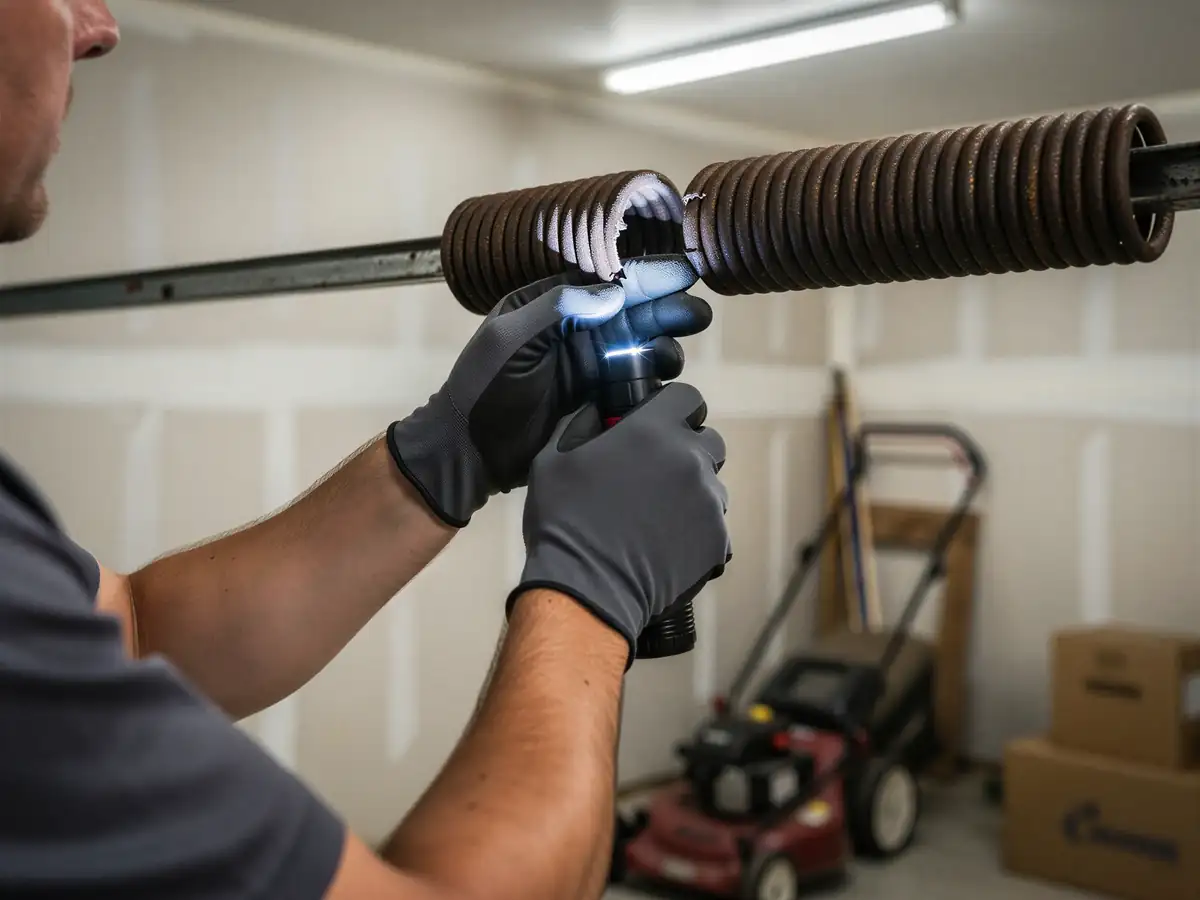
A torsion spring is not a DIY repair. The spring is wound under enough tension to break bones if the winding bars slip, and that's true whether the door is five years old or fifty. What a homeowner in a 1975-built house can reasonably do: check and tighten loose hinge bolts, clean and lubricate rollers and tracks, and replace worn weatherstripping at the bottom of the door. Those jobs don't involve stored tension and don't require special tools.
Where people get hurt is assuming a spring job is like a bolt job. It isn't. If the door won't open, or opens unevenly, or the spring is visibly separated, that's a call, not a project. We'd rather tell you that up front than have you find out the hard way.
Stocked Parts
Because so much of the housing stock in this part of the service area dates to the same mid-1970s build window, we carry the torsion springs, cables, and bearing plates sized for that era's standard door openings on the truck, not back at a shop
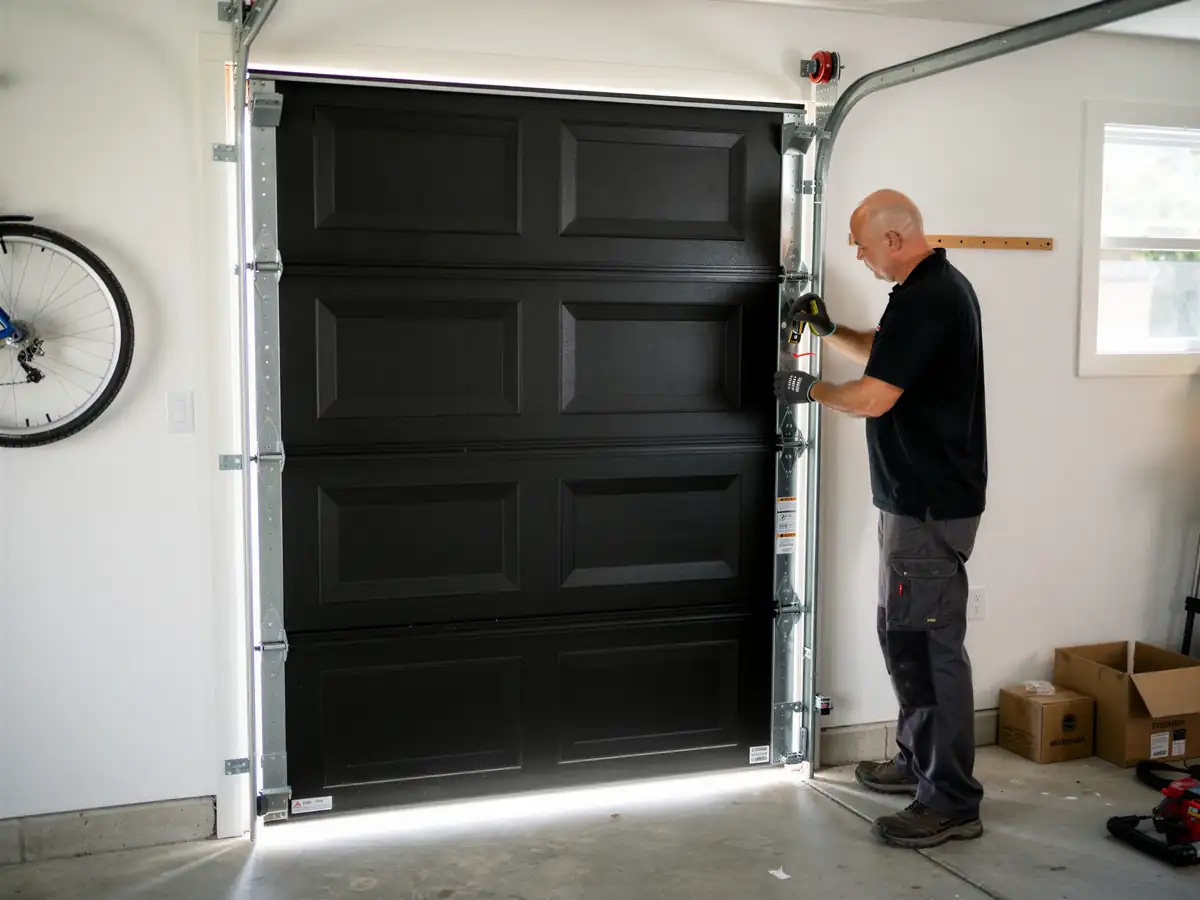
That means a same-visit fix on the parts that fail most often on a house like the ones built around 1975 - the original torsion spring long past its wind-cycle life, the end bearing worn from decades of use, the aftermarket opener bracket that was never matched to the original track.
What we don't stock are obsolete or discontinued panel sections for doors where the manufacturer stopped making replacement parts years ago
On a door that old, if a panel is cracked or dented beyond what a patch will hold, replacement of the full door is usually the honest answer rather than hunting for a part that doesn't exist anymore.
Where This Job Goes Sideways
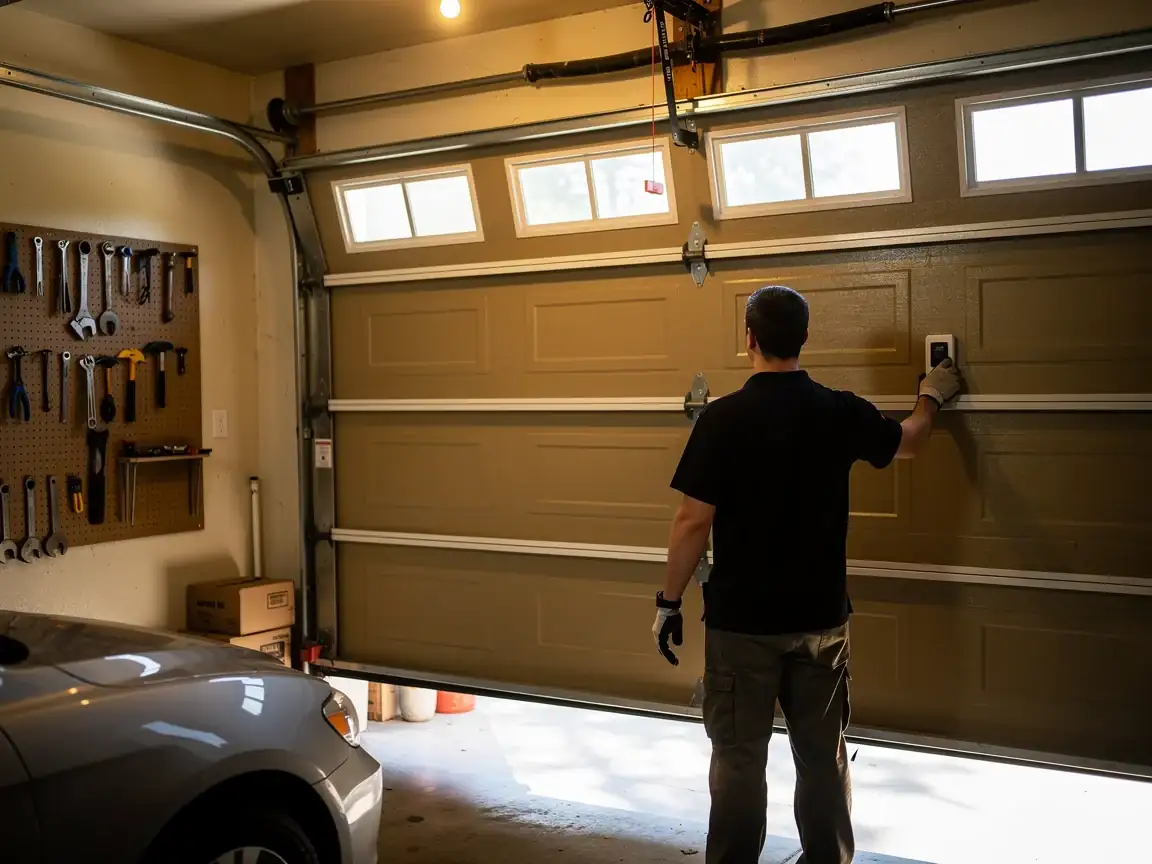
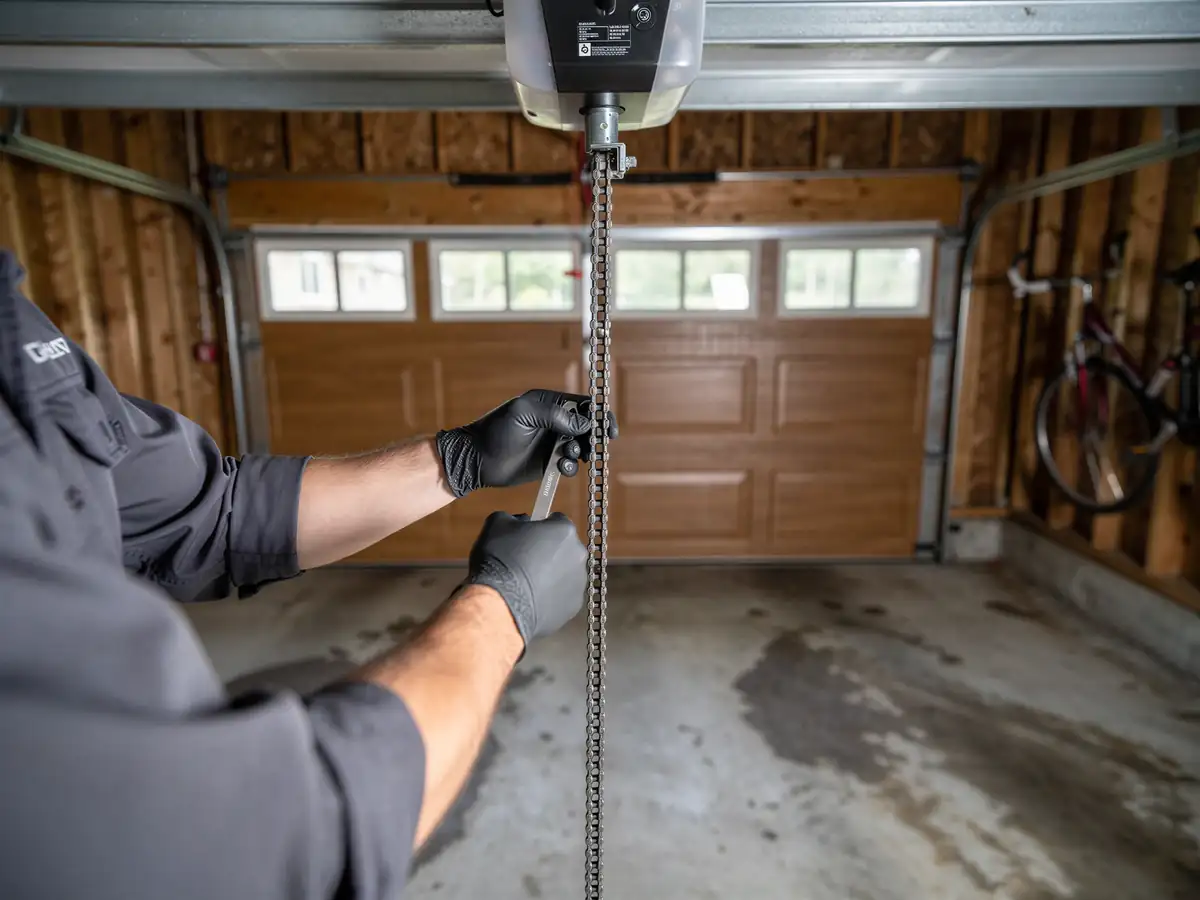
The job goes sideways when what looks like a simple spring swap turns into an opener mismatch. A lot of 1975-era doors had openers retrofitted years after the original install, and the bracket, the travel limits, and the safety sensors on that retrofit were never engineered as one system. Replace just the spring and the door can still bind against an opener that's fighting the wrong tension.
It also goes sideways on distance-driven scheduling. A 19-mile drive from San Ramon means a return trip costs real time, so if a part needs ordering - which happens more often on older, discontinued hardware - we'd rather diagnose everything on the first visit and come back with the full list than make two trips for the same door.