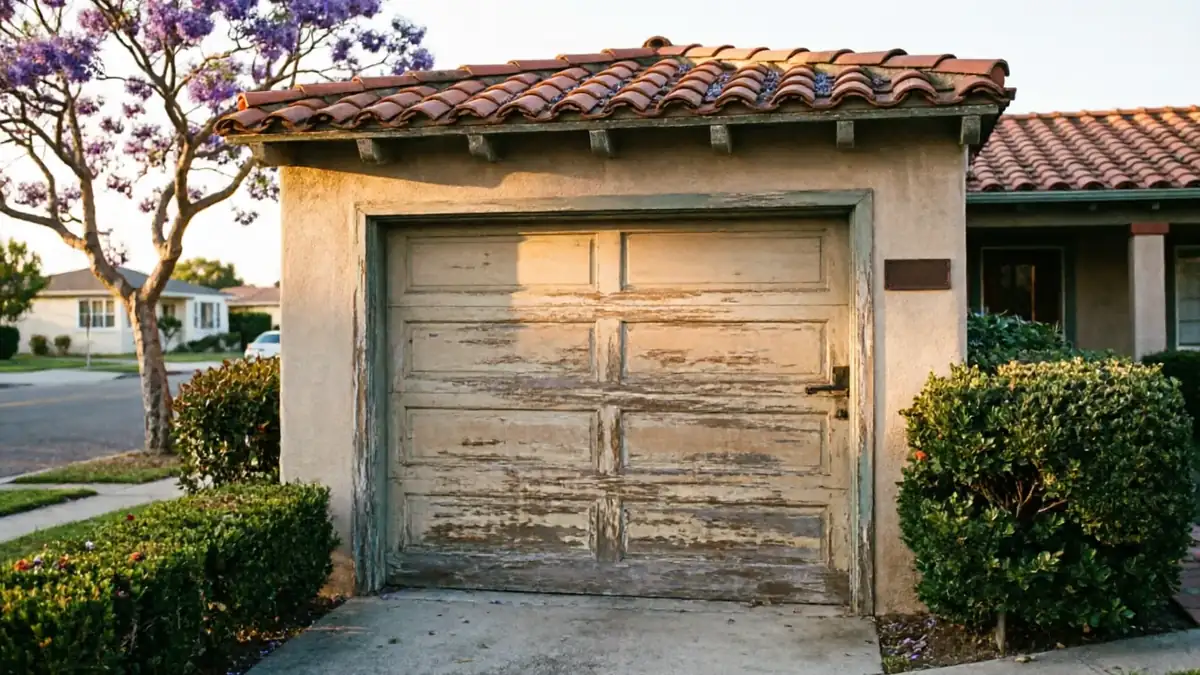
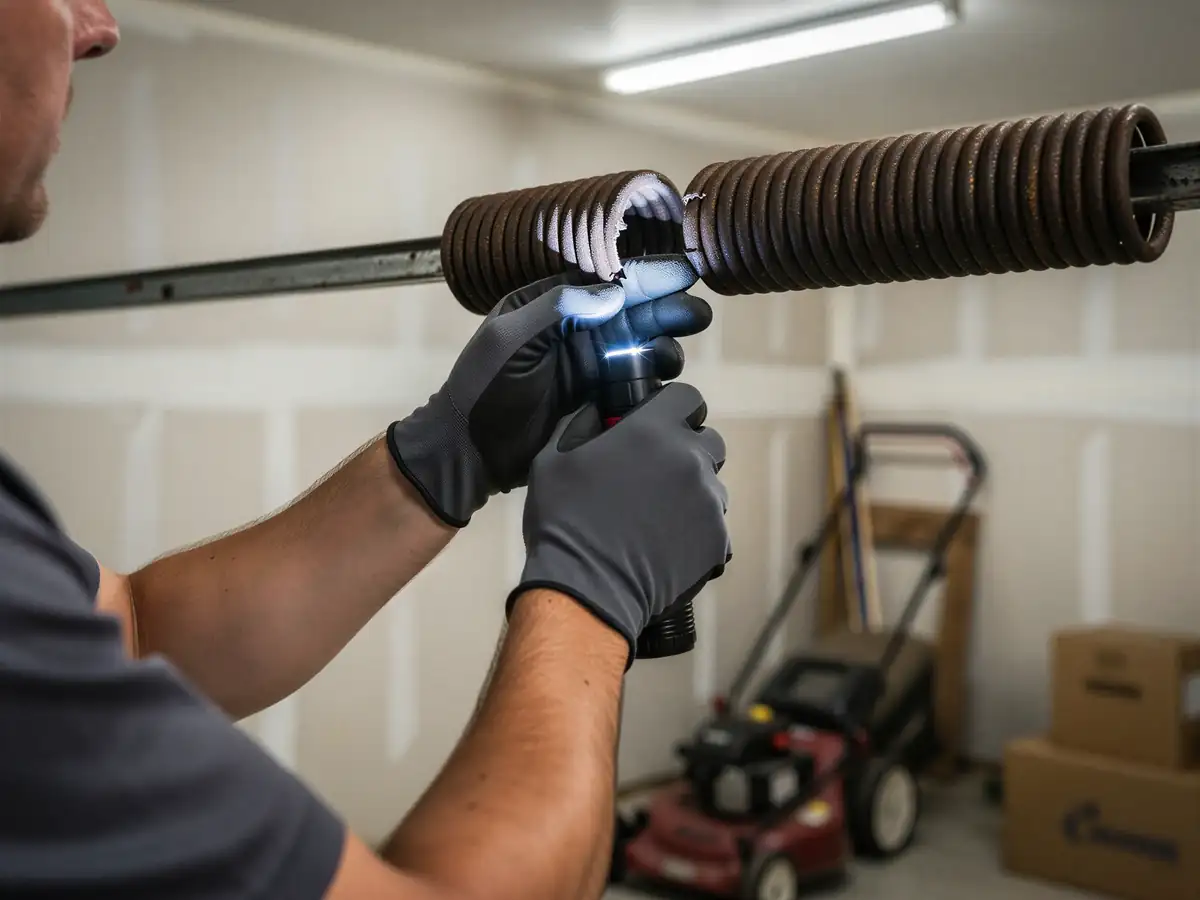
San Ramon's housing stock spans 1938 to 2008, with the median home built in 1973. Most of what we see on service calls sits in that 1960s-70s band, spread across the roughly 29 named areas that make up this part of the valley. A door from that build era usually means a steel sectional panel on a torsion spring system sized for the original hardware, not the heavier insulated panels that came later. The springs, rollers, and tracks on these doors were engineered for a lighter door and a different duty cycle than what's sold today. That matters when you're deciding whether to fix or replace. A door that's structurally sound but running tired springs or a worn roller track is a straightforward repair. A door where the panel itself is bowed, rusted through at the bottom section, or the track has been bent and re-bent from an opener fighting a bad spring is a different conversation. The age of the house doesn't tell you the condition of the door by itself, but it tells you what kind of hardware you're likely dealing with, and that shapes the repair decision before a tech even opens the panel.
When to Call Someone
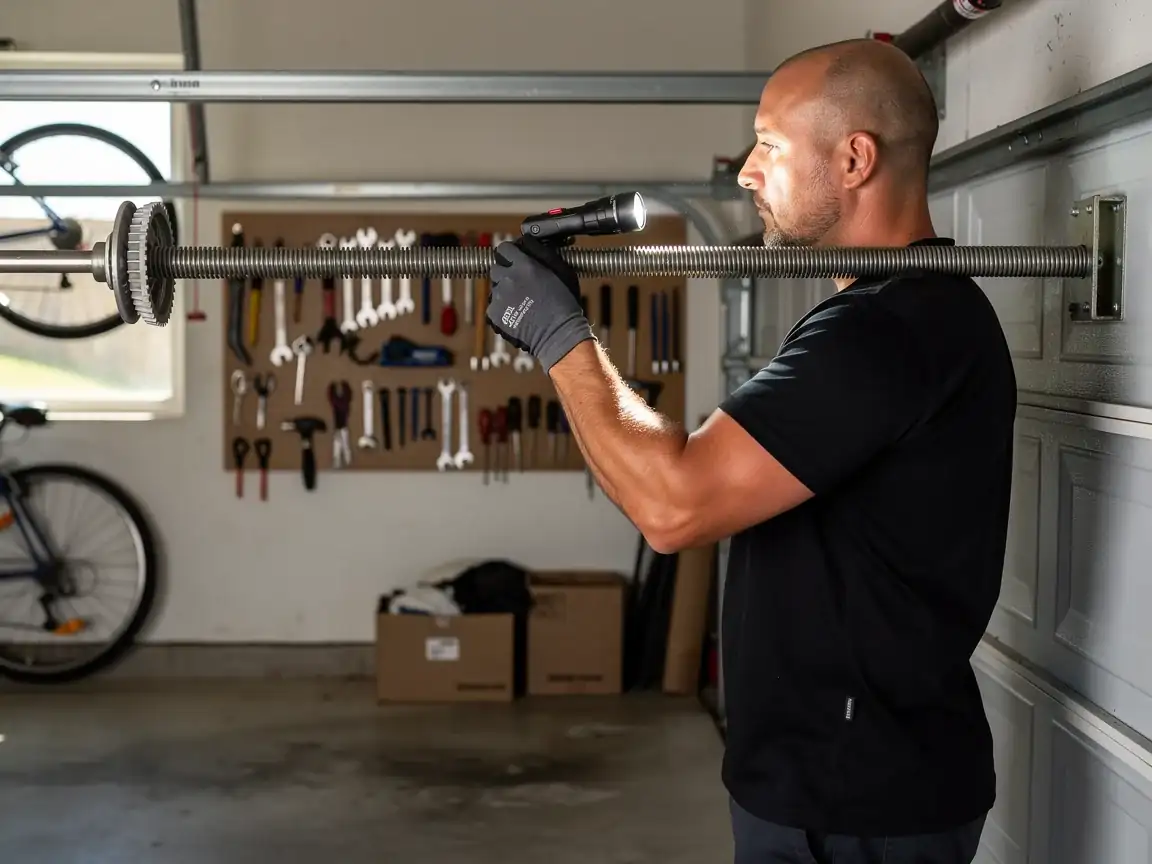
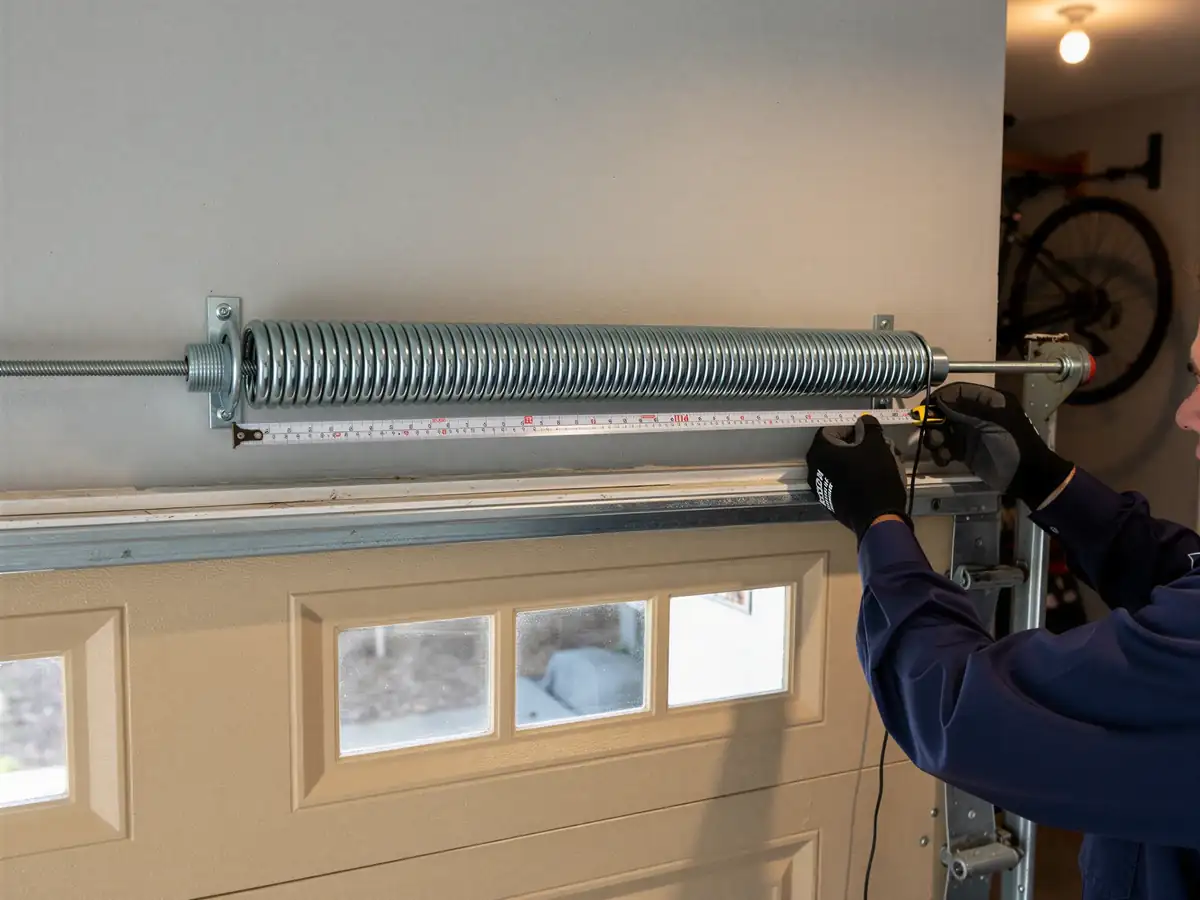
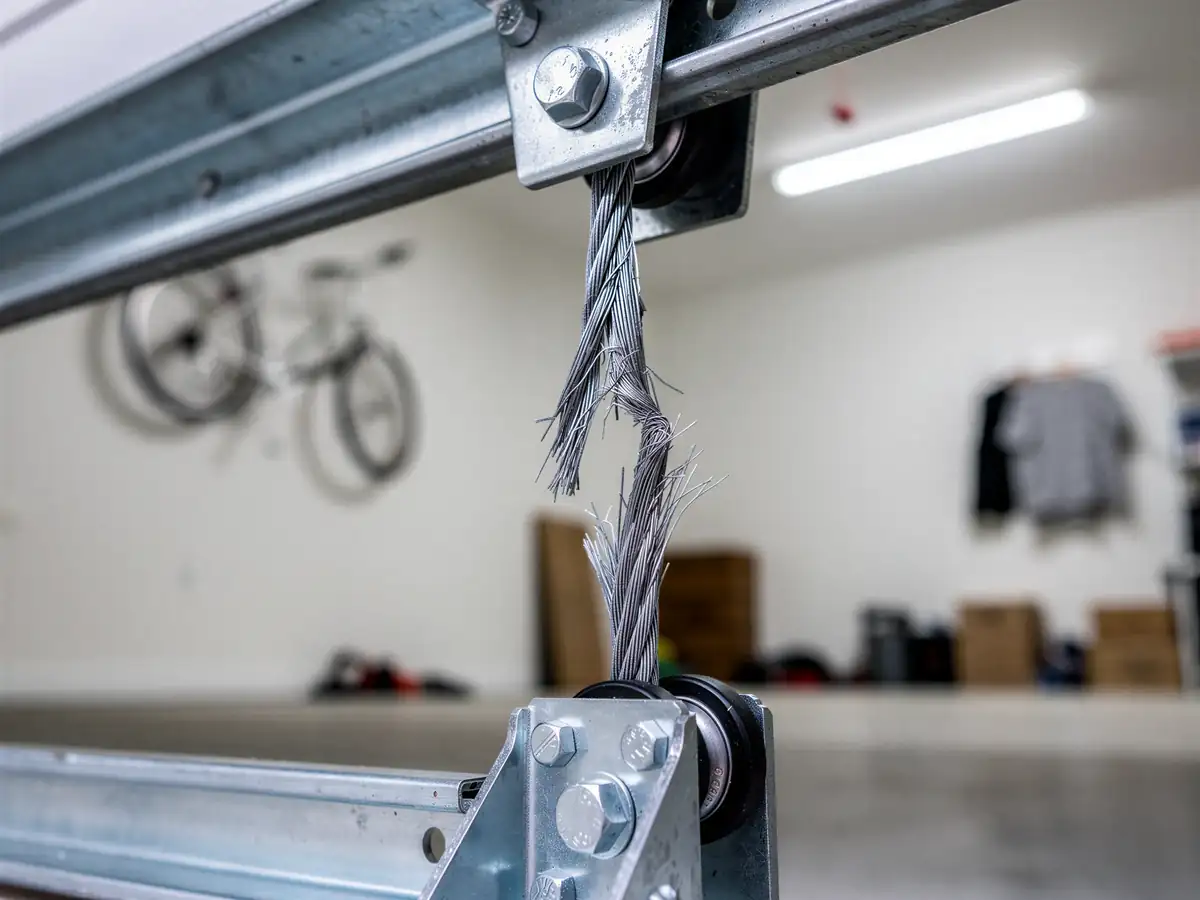
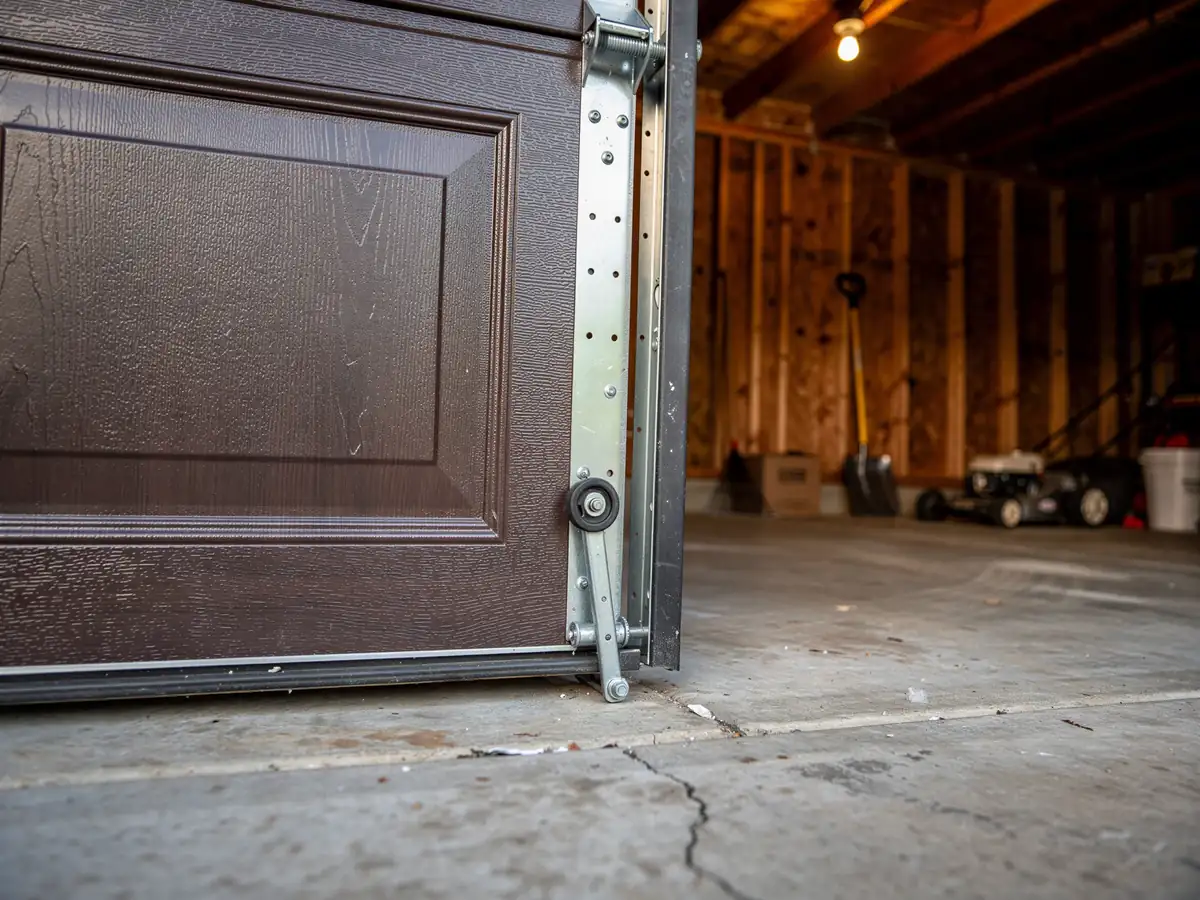
Call before the door fails completely, not after. A torsion spring that's lost tension will make the opener strain and groan on the way up, and you'll notice the door feels heavier than it used to when you lift it by hand with the opener disconnected. Cables fraying at the drum, a track pulling away from the wall bracket, or a panel section that's visibly out of square are all signs the door is past routine lubrication and adjustment. None of these are emergencies you have to live with for weeks, but none of them get better by waiting. On a door built to the specs common in San Ramon's 1960s-70s stock, a spring or cable failure under load can bend the track or crack a panel, turning a $200 fix into a full section replacement. If the opener is cycling the door up and down on its own, or the door won't stay in the up position without help, that's a spring problem, not an opener problem, and it's worth a call before someone gets a finger or a bumper under it.
How Local Conditions Play In
San Ramon sits in a mild climate band with occasional freeze, which is gentler on garage door hardware than a true cold-winter region, but it's not nothing. Hardware on an older door, especially the kind common in homes built through the 1970s, wasn't finished with the corrosion coatings standard on current production. Years of morning condensation and the area's temperature swings work on bare spring coils and unprotected track bolts over decades, even without hard freezes. That's different from storm damage or wind load, which isn't typically what we're diagnosing out here. What we do see is slow fatigue: a spring that's lost a few winds of tension a year until it finally lets go, or a roller that's worn oval from years of running in a track that was never perfectly aligned to begin with. On a door that old, that kind of gradual wear is the rule, not the exception, and it's the reason a 50-year-old torsion spring is a different repair call than a 10-year-old one, even if both look fine from across the garage.
The Cost of This Job
We don't post a flat price for spring or panel work because the right number depends on what's actually on your door, and we're not going to quote one here without having looked at it. What we can tell you is what drives the number up or down: whether the spring size is still a common stock item or an older gauge that has to be special-ordered, whether the track needs straightening or full replacement, and whether one panel is damaged or the whole section run has to come out. San Ramon's median household income sits well above the national figure, and a fair number of owner-occupied homes here are original construction, which means we're often repairing hardware nobody's touched since it was installed. That can mean a straightforward parts swap, or it can mean the original track gauge isn't made anymore and we're matching it as closely as the market allows. Either way, the honest answer is that we price after we see the door, not before.
How it works
From “it’s stuck” to “it’s fixed”
01
Tell us what’s wrong
Describe the symptom - won’t open, loud bang, opener runs but the door won’t move.
02
On-site diagnosis
A technician tests the door under power and by hand and finds what actually failed.
03
Clear, up-front plan
You get the fix that’s needed and what drives the cost - before any work starts.
04
Repaired & tested
The repair is done, the door is set true and tested, and the work area left clean.
Not sure which repair your door needs in San Ramon, CA? Describe what it’s doing - every job starts with a diagnosis.
01My house was built in the 1970s. Is my garage door original?
It's possible. San Ramon's housing stock runs from 1938 to 2008 with a median build year of 1973, and a lot of that 1960s-70s construction still has its original door or at least original track and spring hardware. If no one's replaced the springs, they're well past a normal service life and worth having checked even if the door still looks fine.
02Does San Ramon's climate wear out garage door hardware faster?
Not the way hard freeze-thaw regions do. San Ramon sits in a mild band with only occasional freeze, so you're not fighting the extreme spring and cable stress that comes with real winter weather. But older unfinished hardware still corrodes slowly from everyday condensation, which adds up over 40 or 50 years.
03How do I know if it's cheaper to fix or replace?
It comes down to what's damaged. A spring, cable, or roller repair on an otherwise sound panel is almost always the cheaper route. Once a panel is bowed or rusted through, or the track has been bent by a failed spring under load, replacement sections or a full door often make more financial sense than patching.
04Can you still get parts for an older door?
Usually, yes, for common spring sizes and standard track. Where it gets harder is older gauge hardware or discontinued panel profiles from homes built in the earlier end of San Ramon's 1938-2008 range. In those cases we match as closely as the market allows rather than promise an exact original part.
Ready to get your garage door sorted?
Tell us what it’s doing and where you are in San Ramon - we’ll take it from there.