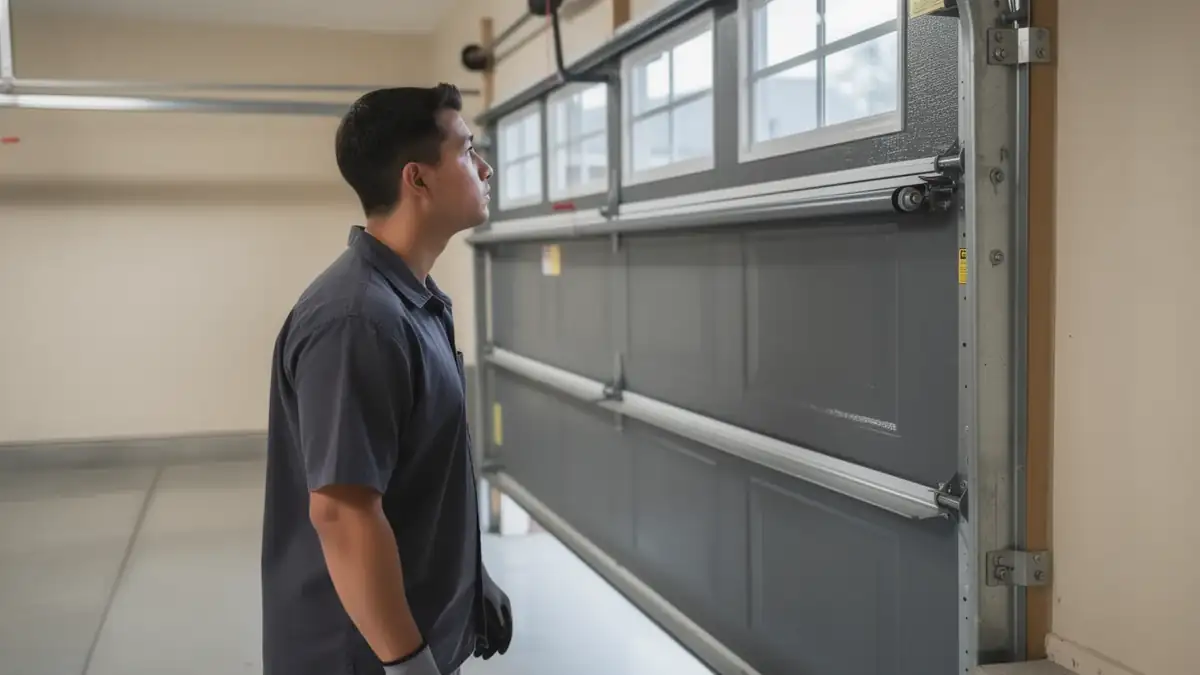
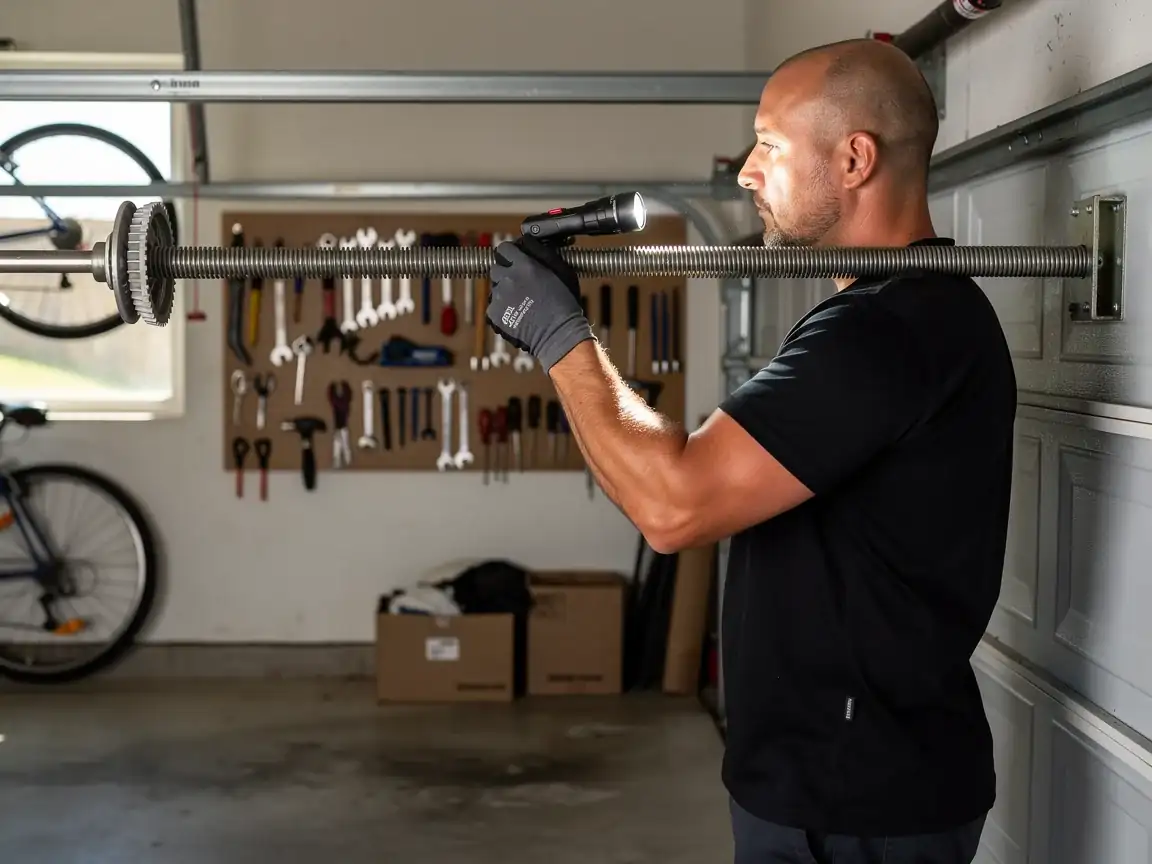
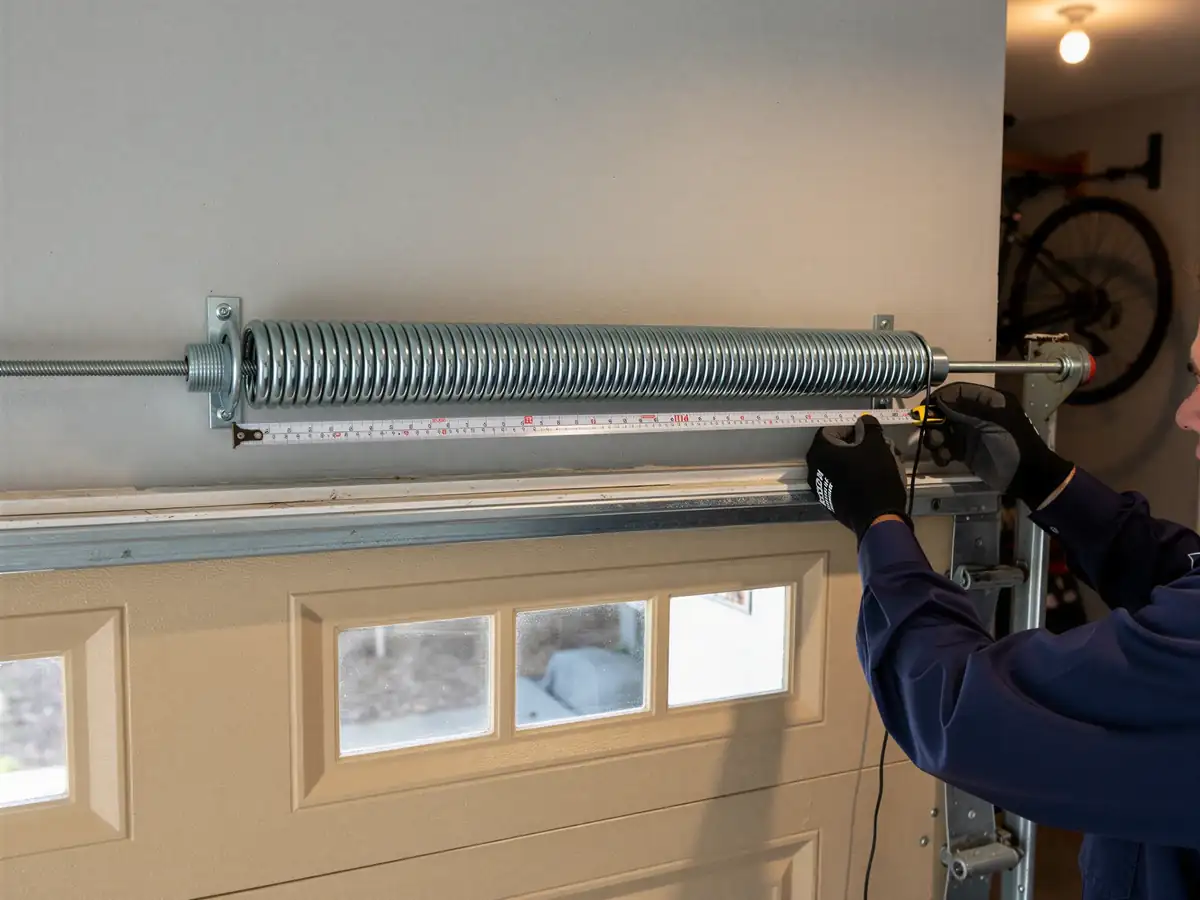
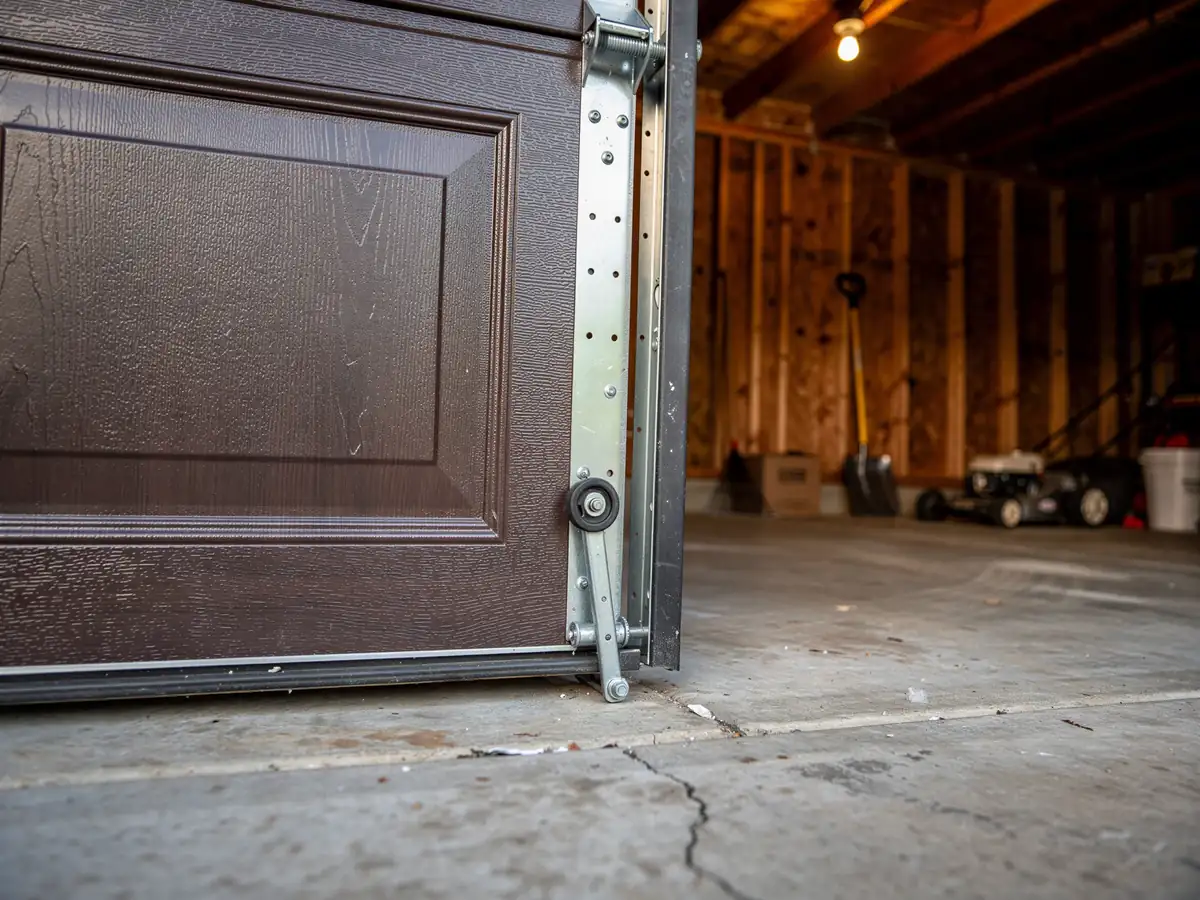
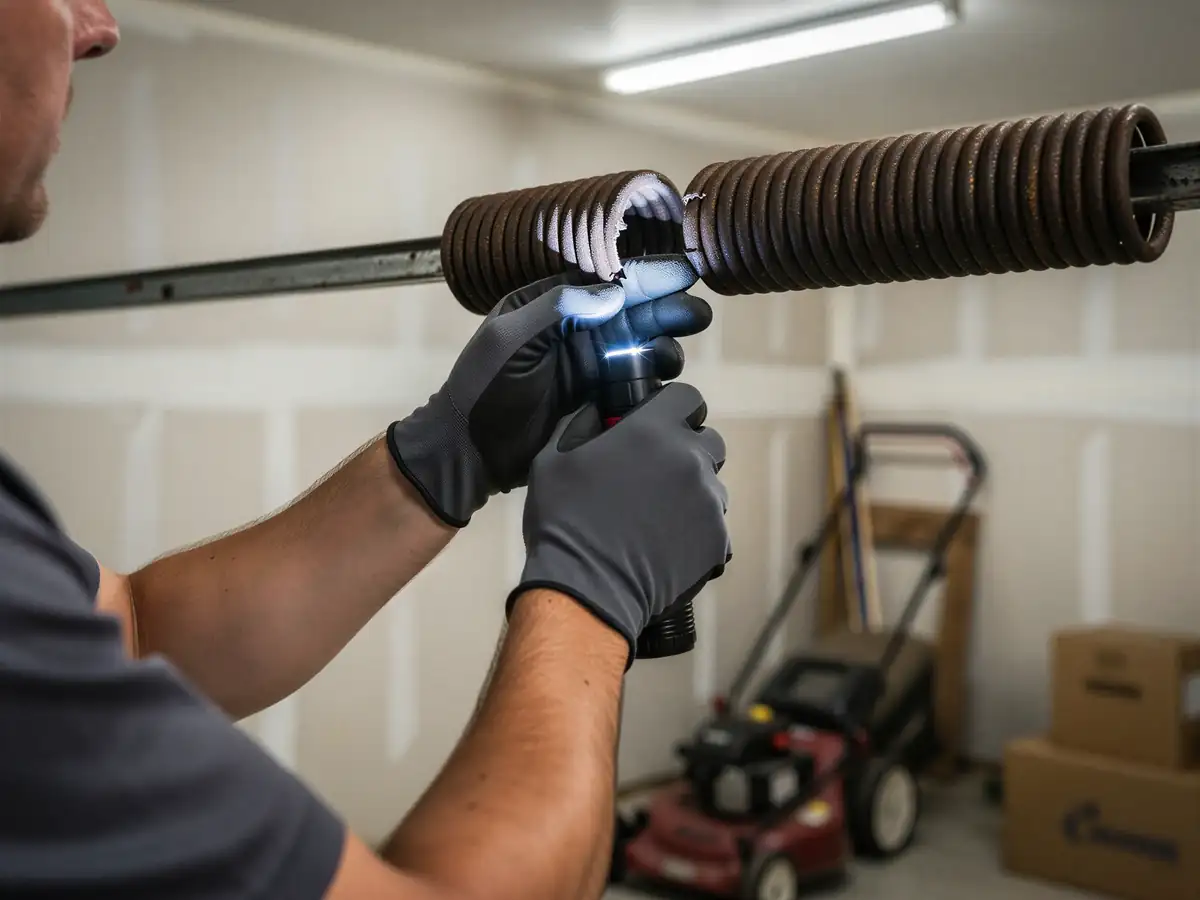
San Ramon's housing stock runs from 1938 up through 2008, with a median build year of 1973, and most of the area's 29 named neighborhoods went up through the 1960s and 70s. That matters for noise. A door installed during that run is working on galvanized torsion springs and steel rollers that were standard then, and those parts are long past the cycle count they were rated for. A low rumble as the door travels usually means worn rollers riding in a track that lost its factory lubrication decades ago. A sharp bang - loud enough to bring someone running from another room - is almost always a torsion spring letting go; the metal fatigues with use and fails all at once, not gradually. Squealing on the way up points to a dry hinge or a seized roller bearing. A rhythmic clunk once per rotation is a flat spot on a roller or a bent track bracket. None of these sounds are random. They track directly to how old the hardware is, and in an area where so much of the housing dates to the same twenty-year window, a lot of doors are hitting that wear point around the same time.
When to Call Someone
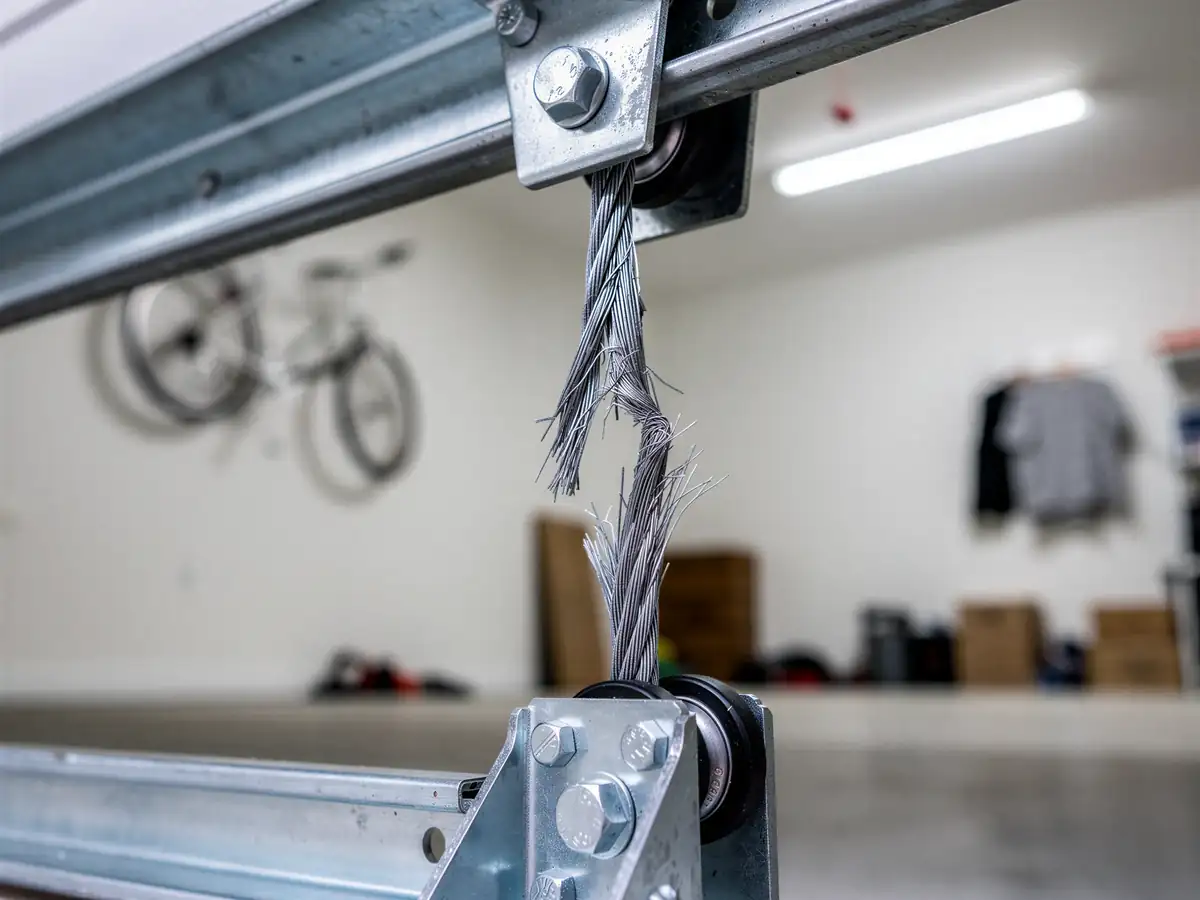
Not every sound needs a truck. A door that's a little noisy but still moves smooth and stops where it should can usually wait for a scheduled tune-up. Call sooner if you hear a sudden loud bang followed by the door refusing to move, or moving only partway - that's a broken spring, and running the opener against a dead spring strains the motor and can bend the track. Call sooner too if a cable looks frayed or has come off the bottom bracket; a door with one working cable will rack sideways and that stress goes straight into the track and rollers. Grinding that gets worse week over week, rather than staying steady, usually means a bearing is failing, not just dry. Given how much of San Ramon's housing dates to the 1960s and 70s, that kind of progressive wear shows up often - original hardware doesn't fail all at once, it degrades over years and then goes. One honest note: if the noise is new and the opener itself is only a couple of years old, some settling and minor grinding during break-in is normal and not worth a service call yet. Wait a couple of weeks and see if it quiets down before booking anything.
How Local Conditions Play In
San Ramon sits in a mild climate with occasional freeze, not the deep freeze-thaw cycles that crack concrete and warp steel elsewhere. That's good news for the door itself, but it still plays into noise. On the handful of cold mornings each winter, grease inside torsion spring coils and roller bearings stiffens up, and a door that's silent in summer can groan or squeal on that first cycle of a cold day until things warm up and loosen. The bigger factor here is age, not weather - with a median build year of 1973, and most of the area's 29 neighborhoods built in that same era, hardware wear is doing more work than climate is. Seasonal humidity swings can also cause wood jambs and door tracks to shift slightly, which shows up as new scraping or a one-time pop as the track resettles. It's not dramatic, but it's consistent, and it's a different pattern than you'd get somewhere with hard freezes or heavy year-round humidity.
The Cost of This Job
We don't have pricing to quote in general terms here, and we wouldn't want to anyway - the real cost driver on a noisy door isn't the noise, it's what's actually worn. A roller job on a door that's otherwise sound is a different job than replacing a torsion spring on a door that's original to a house built in the 1960s or 70s, which is common across this area given the median build year of 1973. Homeowners here - median household income runs $146,657 across roughly 210,865 households, with 114,515 of those owner-occupied - are often weighing whether to fix an aging door or put that money toward replacing it outright, especially once a door is original hardware from a 50-plus-year-old build. That's a judgment call that depends on the specific door, not the town. One thing we won't do is sell a full replacement when a spring and a roller set will quiet the door down and get another decade out of it - but we also won't tell you a 1970s door with a cracked panel and a failing opener is worth patching piece by piece. The honest answer sits somewhere between those two, and it's different for every door we look at.
How it works
From “it’s stuck” to “it’s fixed”
01
Tell us what’s wrong
Describe the symptom - won’t open, loud bang, opener runs but the door won’t move.
02
On-site diagnosis
A technician tests the door under power and by hand and finds what actually failed.
03
Clear, up-front plan
You get the fix that’s needed and what drives the cost - before any work starts.
04
Repaired & tested
The repair is done, the door is set true and tested, and the work area left clean.
Not sure which repair your door needs in San Ramon, CA? Describe what it’s doing - every job starts with a diagnosis.
01Why does my garage door only make noise on cold mornings?
San Ramon's climate is mild with just occasional freeze, but even a light cold snap stiffens the grease inside spring coils and roller bearings overnight. A door that's quiet all summer can groan or squeal on that first cycle of a cold morning until it warms up and loosens. It usually settles down within a few cycles once the day warms.
02Is a loud bang from my garage door always a broken spring?
It's the most common cause, especially in a door running original hardware. Torsion springs fatigue with use and let go all at once rather than wearing gradually, so a sudden bang followed by a door that won't move, or moves only partway, almost always points to a snapped spring rather than anything else.
03My house was built in the 1970s - is the original garage door hardware still on it?
It's possible. San Ramon's median build year is 1973, and a lot of the area's housing from that era still has original torsion springs and steel rollers if nobody's replaced them. Hardware from that period is well past its rated cycle count, so noise from an untouched door that age isn't surprising.
04Should I repair my noisy door or just replace it?
Depends on what's actually worn. A roller or bearing job on an otherwise sound door is worth doing. A door that's original to a 1960s or 70s build, with a failing opener and a cracked panel on top of the noise, is a different conversation. We'll tell you honestly which side of that line your door is on.
Ready to get your garage door sorted?
Tell us what it’s doing and where you are in San Ramon - we’ll take it from there.