Can You Do This Yourself
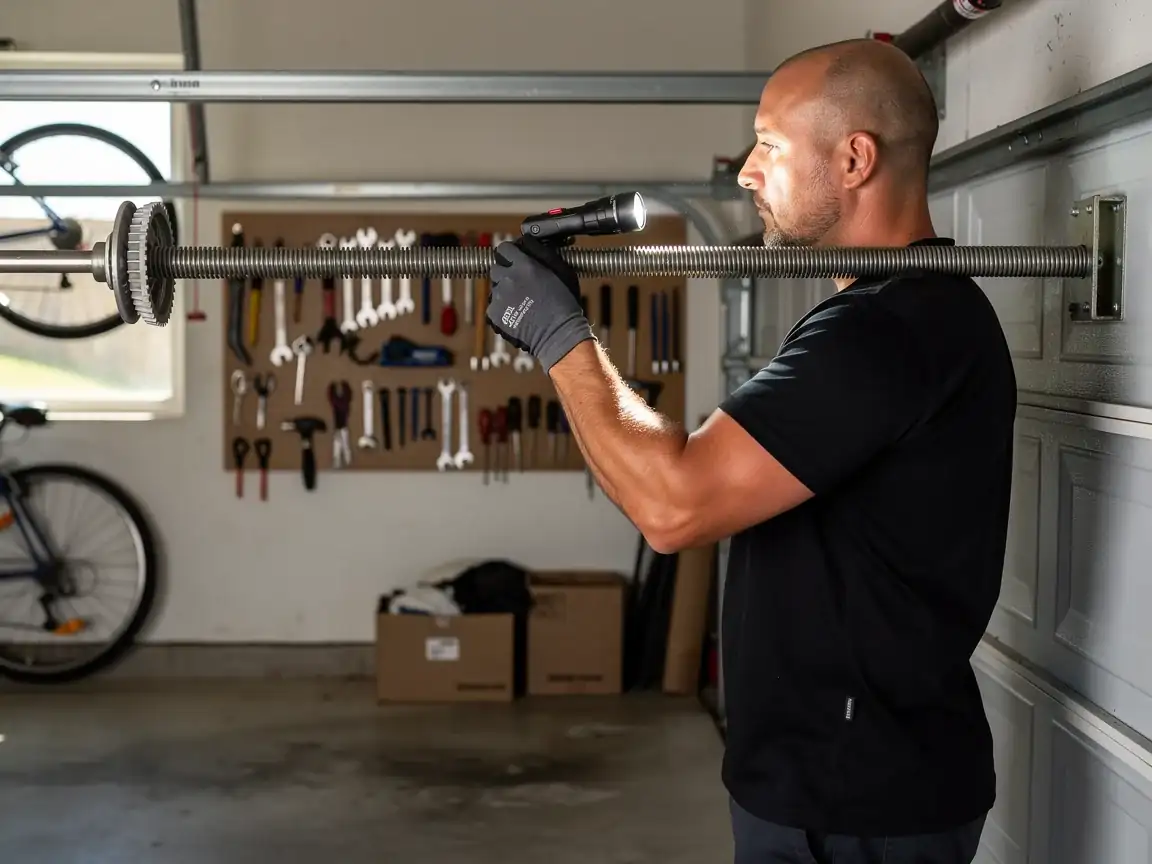
A garage door cable runs under real tension because it's tied to a wound spring doing the lifting work your arms can't
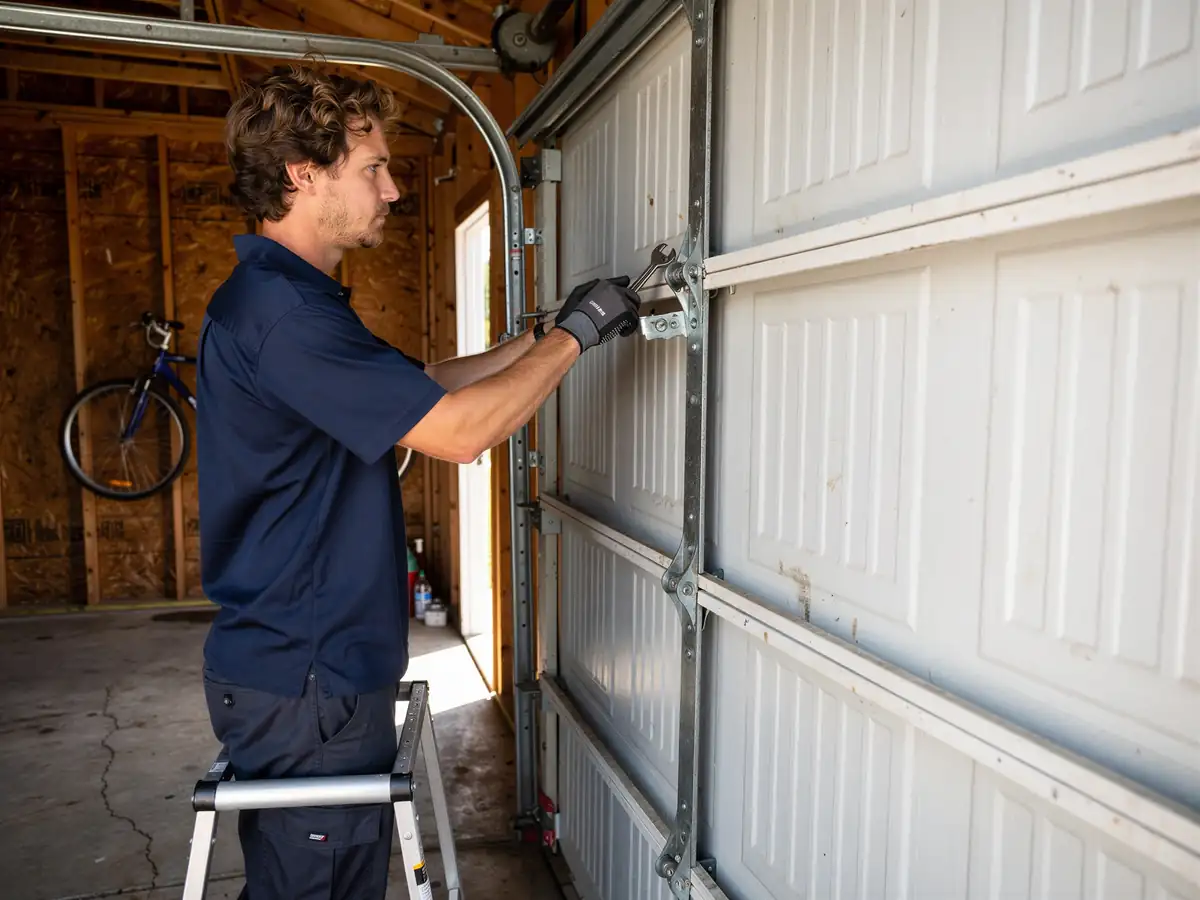
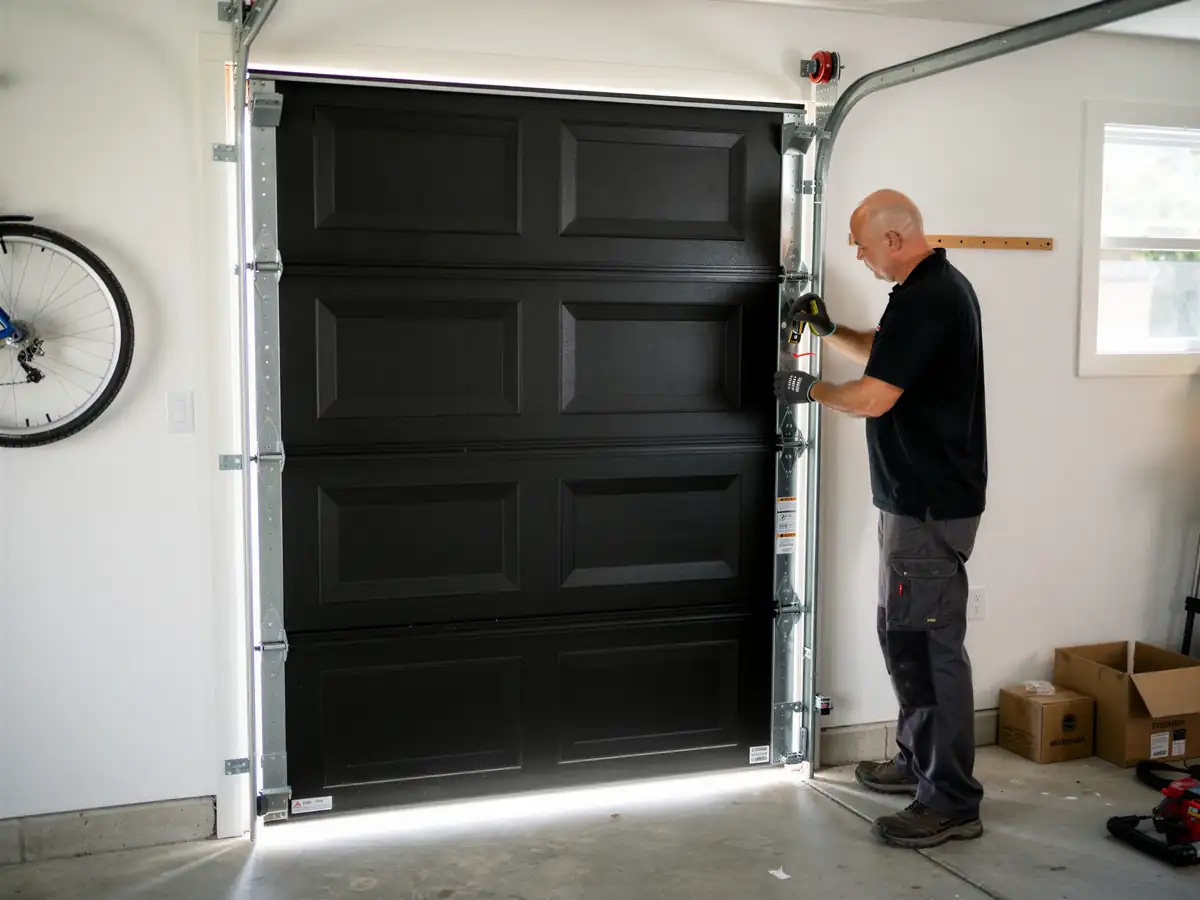
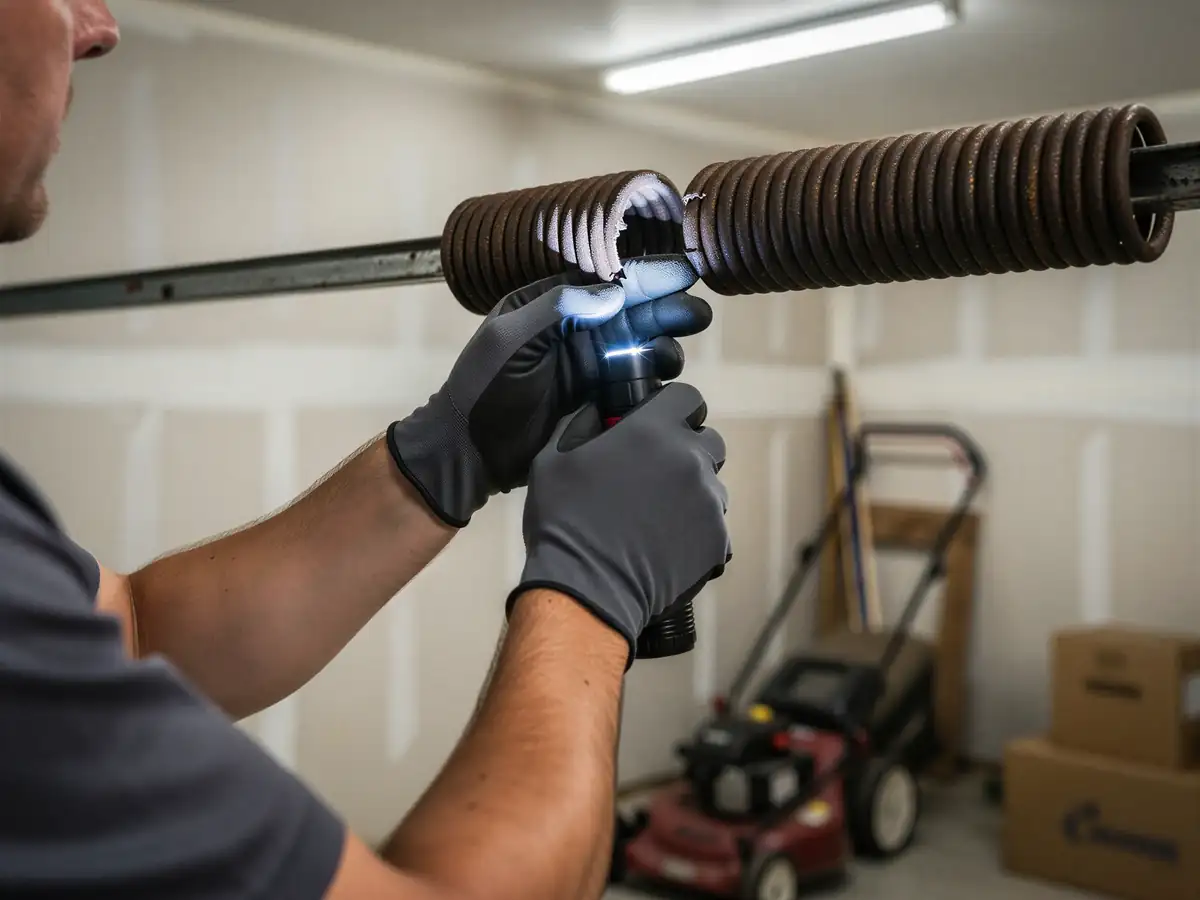
If a cable has snapped, the door can drop fast and uneven, and the opposite side is often still under load. That's not a job for a ladder and a Saturday afternoon. Even just loosening the drum to re-seat a cable that's jumped its track means working next to a spring that can let go.
What you can safely do yourself: look
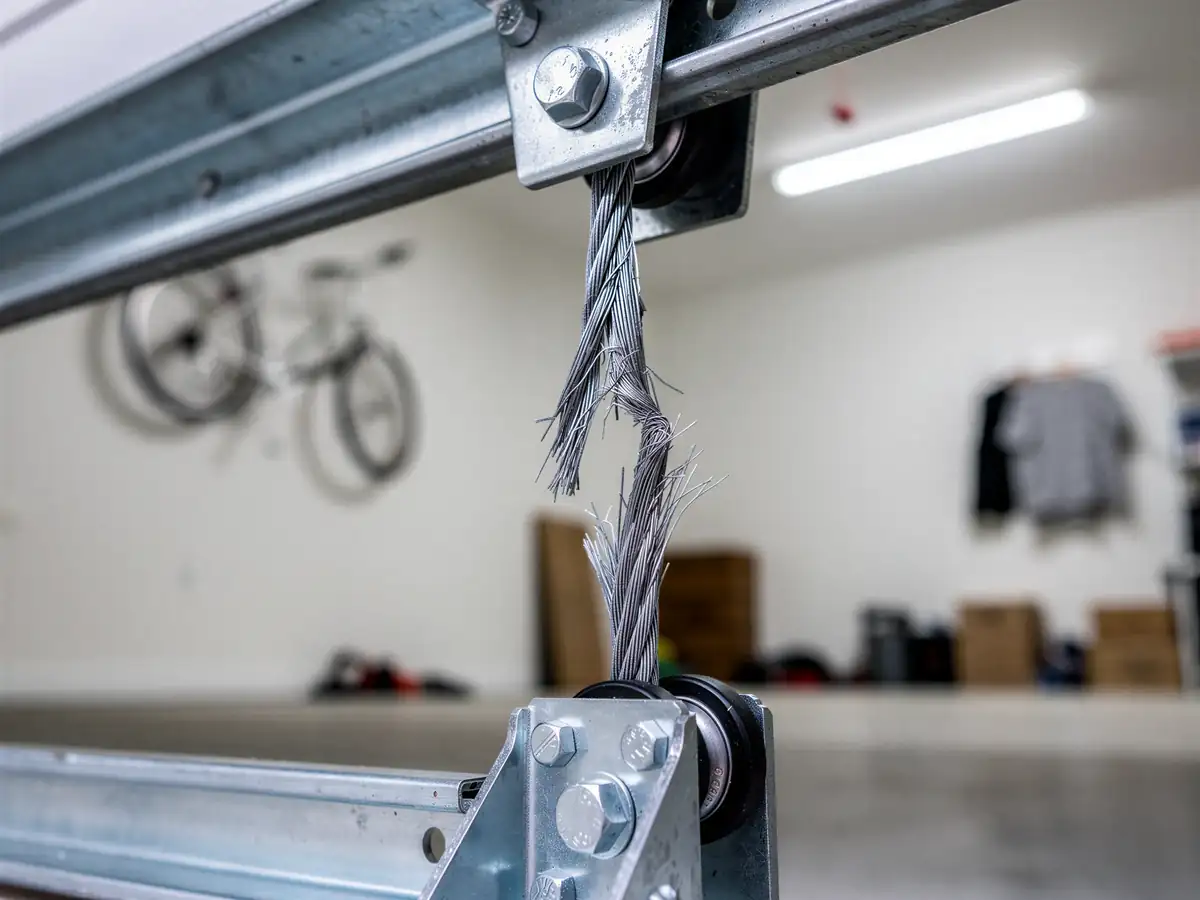
Pull the release cord, open the door by hand if it's safe to move, and check whether the cable is frayed, kinked, or has come off the bottom bracket versus snapped clean. Note if one side of the door hangs lower than the other. That tells us a lot before we even arrive.
We'll say plainly what we won't do
We don't talk anyone through a cable or spring repair over the phone, and we won't recommend a DIY fix on anything load-bearing. If the drum, bracket, or track is bent along with the cable, that's usually more than a cable swap, and we'll tell you that up front rather than quote a cable repair that turns into something bigger once we're under the door.
What Causes It Around Here
Housing in this service area was built mostly between 1938 and 2008, with the bulk of it going up in the 1960s and '70s and a median build year of 1973. That matters for cables because galvanized steel aerospace cable has a working life, and a lot of doors out here are still running original or first-replacement hardware from that build era. Fifty-plus years on, the zinc coating is thin and the strands fray from the inside out, usually at the drum or the bottom bracket where the cable flexes thousands of times a year.
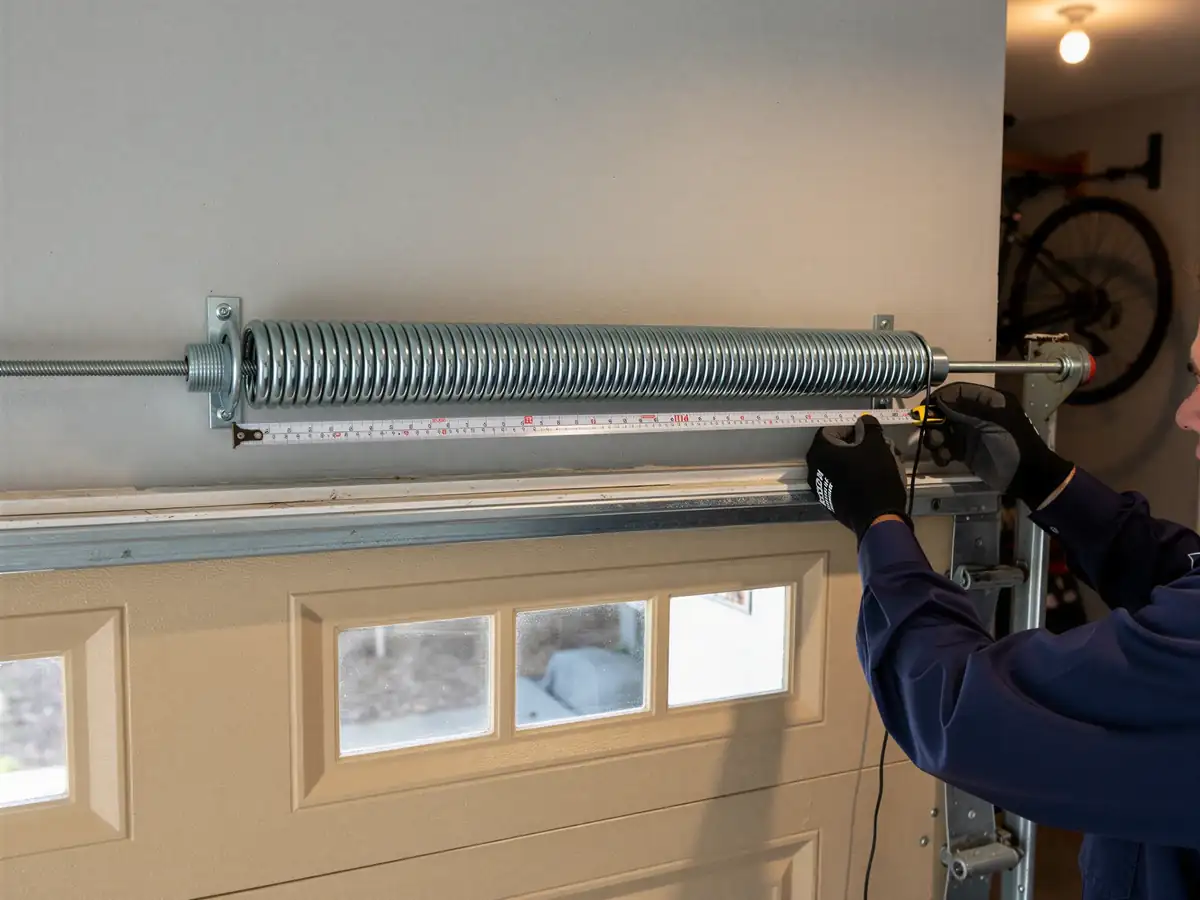
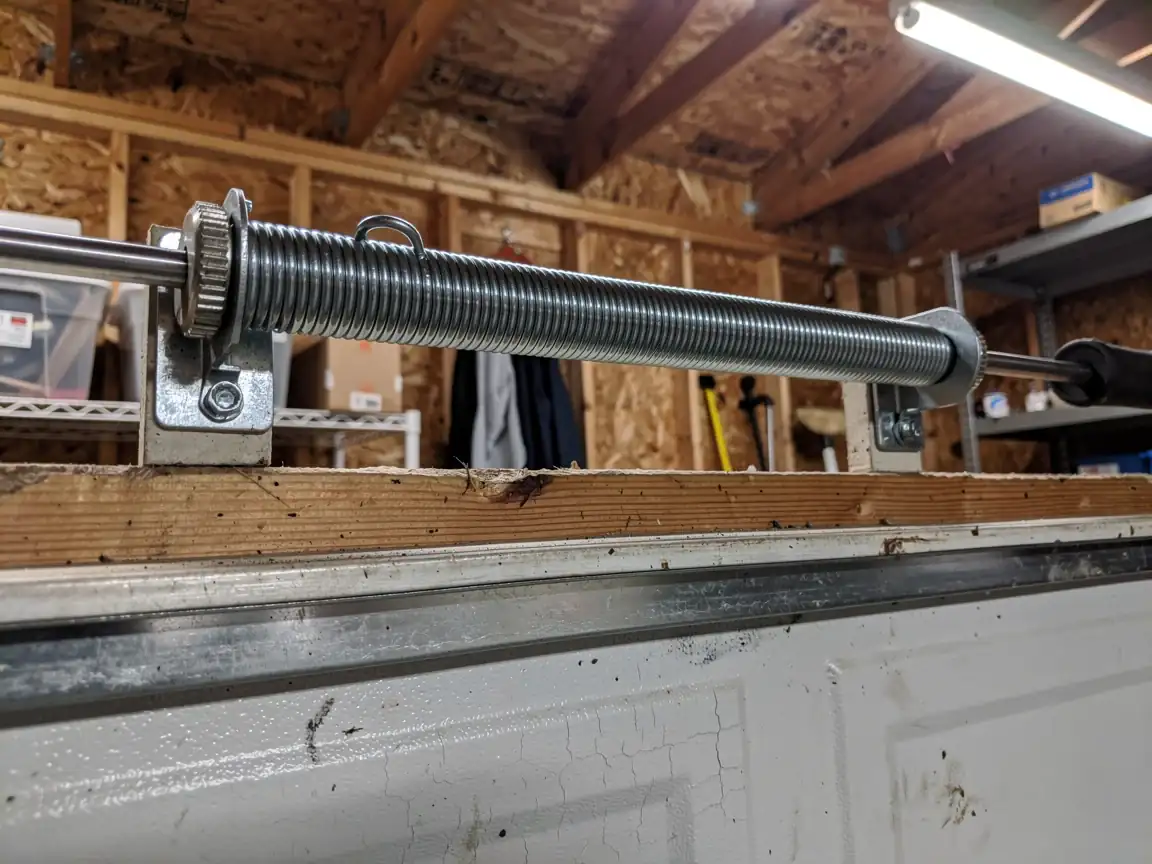
The climate here is mild with occasional freeze rather than hard winters, so we don't see the heavy rust failures you'd get in a wetter or colder region. What we see instead is dry, UV-cycled cable that gets brittle and starts shedding strands quietly, with no obvious warning until one lets go. Doors that sit unused for stretches, or openers that haven't been lubricated in years, speed that up. Torsion springs losing tension also shift extra load onto the cables, so a cable failure sometimes points back to a spring that was already due.
The Symptom
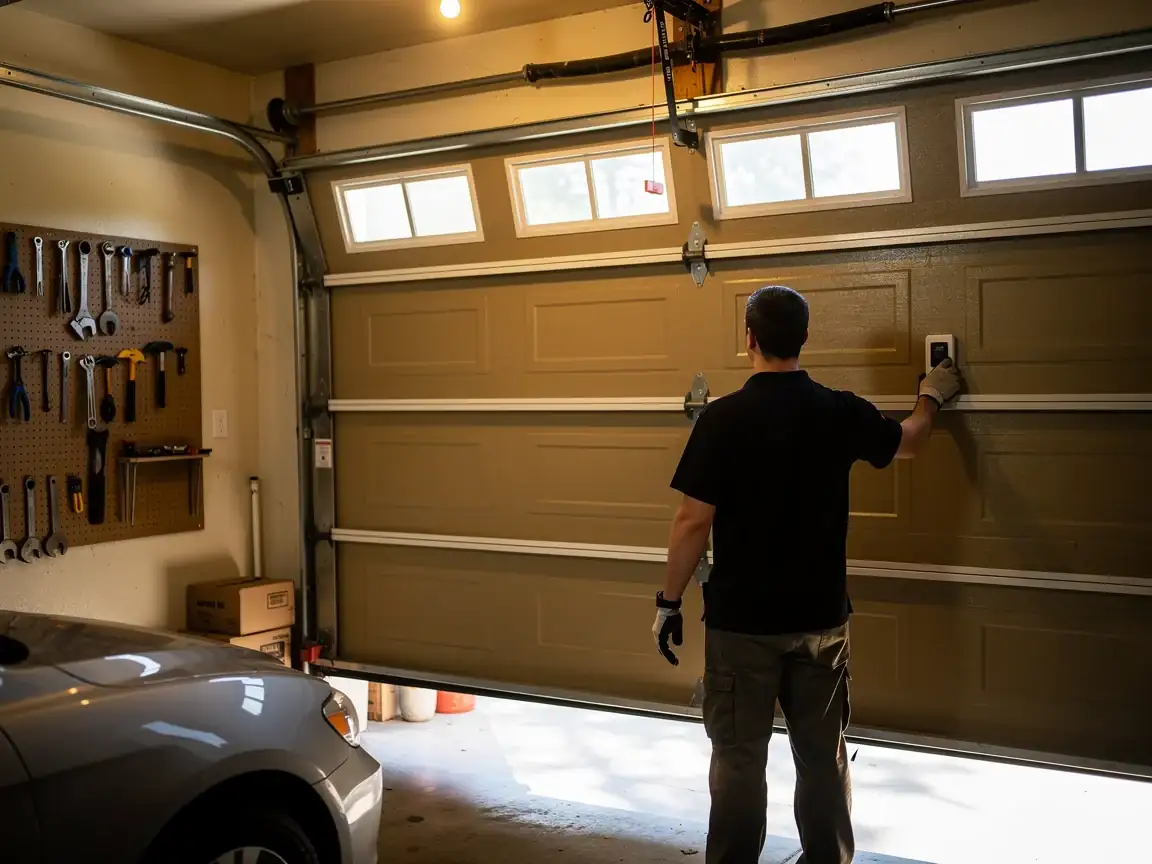
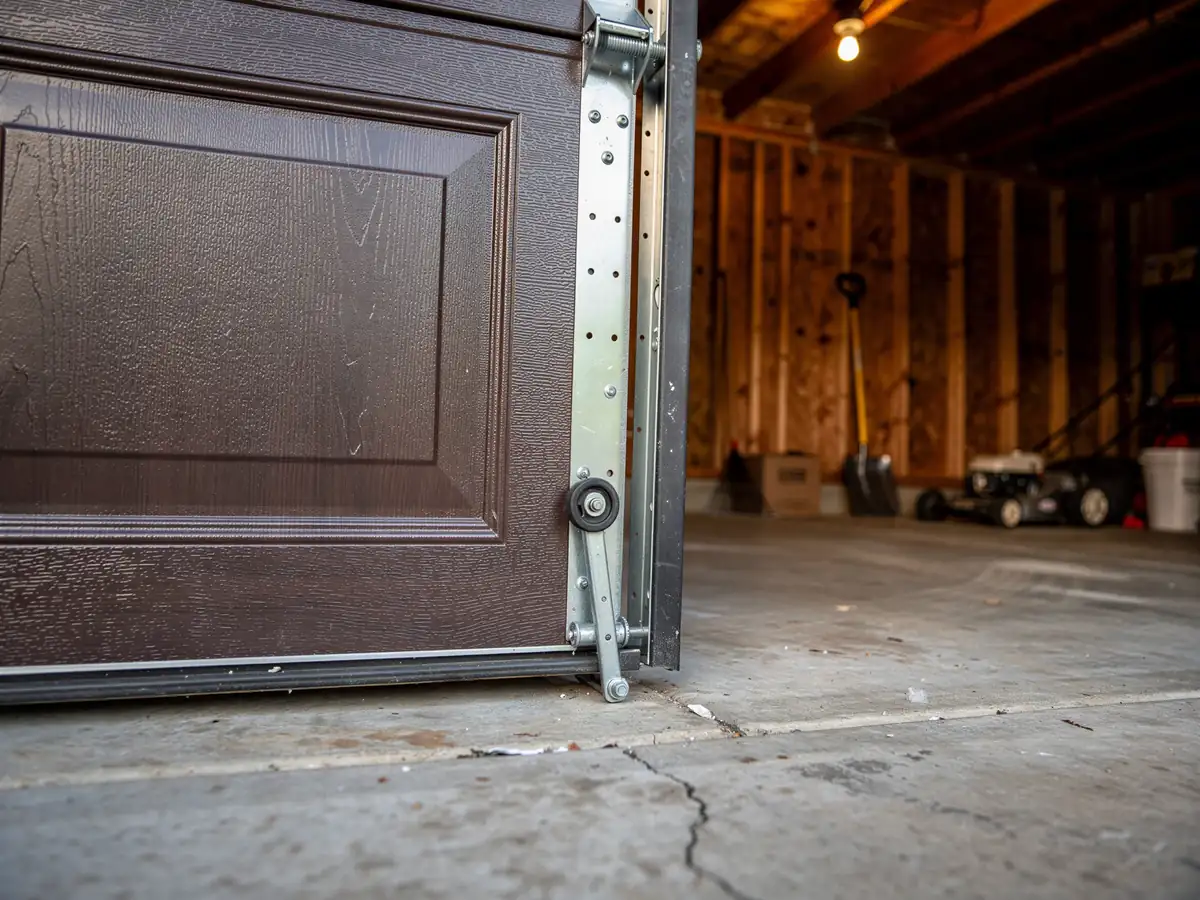
The most common call is a door that's suddenly crooked, sitting at an angle with one corner lower than the other. That's one cable holding while the other has let go or slipped the drum. You'll sometimes see slack cable coiled near the bottom bracket, or hear a loud snap right before the door drops partway.
A slower version of the same problem is a cable that's frayed but hasn't broken yet. Thin wire strands sticking out near the bottom roller or the drum at the top of the track are a sign it's close to failing, not a cosmetic issue to leave alone. If the door is noticeably harder to lift by hand, or it jerks instead of moving smoothly, the cable or the spring it's paired with is already compromised.
Don't force the opener on a door with a broken or loose cable. Running the motor against an unbalanced door strains the opener's gears and can bend the track, turning a cable repair into a bigger bill.
The Cost of This Job
What drives the cost on a cable repair is mostly what else comes with it
A clean cable swap on a door where the springs, drums, and track are all in good shape is the simplest version of this job. It gets more involved when the spring that was carrying the load also needs replacing, when a bent drum or bracket has to come off, or when the door has two springs and two cables and both need attention because one failure usually means the other side isn't far behind.
We don't price this over the phone sight unseen
Because a snapped cable and a frayed cable that hasn't failed yet are different jobs, and a bent track changes everything. One honest limitation: if we get on site and find the door itself is warped or the track is bent beyond a reasonable adjustment, we'll tell you that a cable repair isn't worth doing on its own, because the new cable will just fight a door that doesn't hang straight. In that case, replacement talk is the right conversation, not a repair we'd be patching over a bigger problem.