Where This Job Goes Sideways
Blackhawk is a small place
About 3,887 households, nowhere near the size of the service area as a whole. That matters for how we work the calendar: a town this size doesn't generate daily call volume on its own, so when we get a Blackhawk job we're usually coming the 3 miles from San Ramon specifically for that address, not passing through on a bigger run.
- 3,887 households
- 3 miles
It also means the fault pattern here is narrower than you'd see across the wider area
Where houses span 1938 to 2008. Blackhawk's housing stock mostly dates to around 1988, a good decade and a half newer than the 1973 median for the broader service area. That's not a small gap. A door and opener installed in the late 1980s was built to a different spec than the one-piece doors and older chain-drive units common on 1960s and 70s houses elsewhere in F10's named areas. Newer doesn't mean trouble-free - it means a different set of parts failing for different reasons, usually electronic before mechanical.
The Symptom
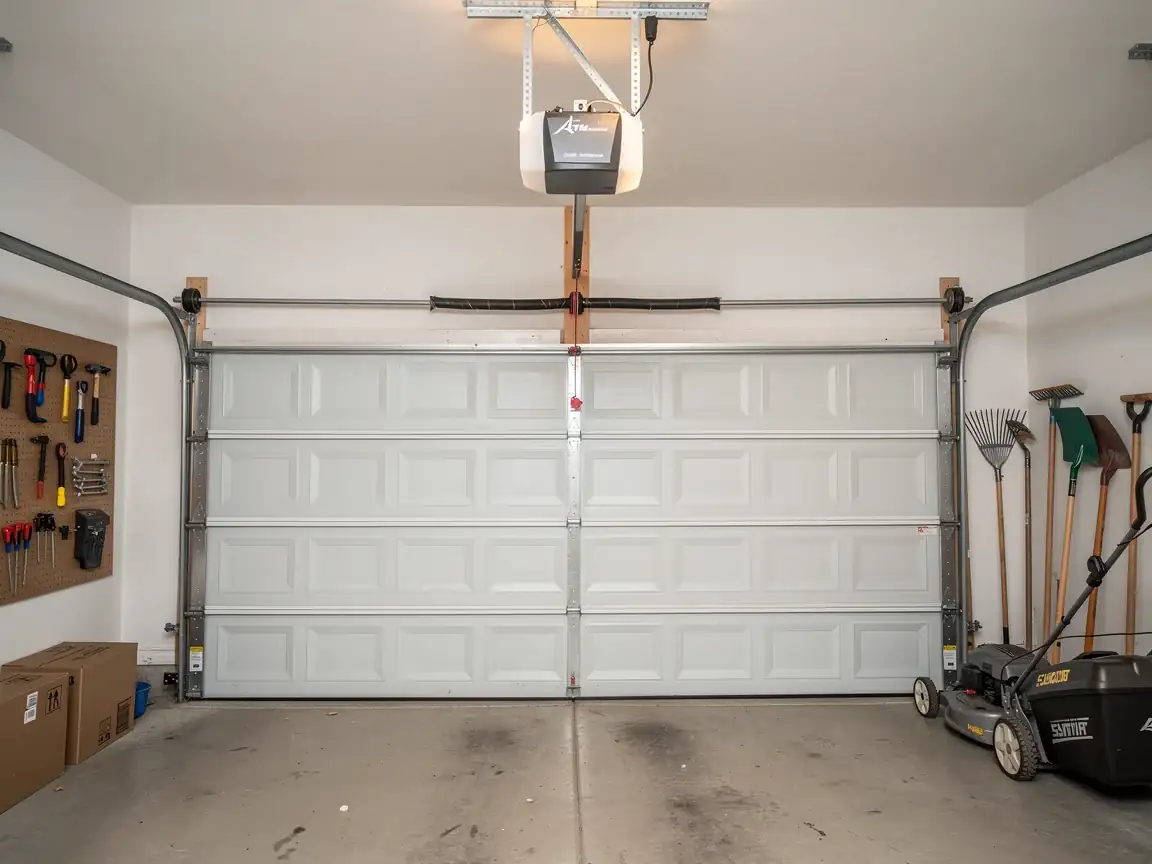
On a house built around 1988, the opener itself has often been swapped once already, sometimes twice, since the original install. What we see most on this vintage: logic boards that have taken thirty-plus years of garage temperature swings and finally give out, travel modules that drift so the door reverses before it seats, and capacitors in the motor housing that weaken enough to make the unit hum and stall instead of lifting.
That's different from the failure you'd expect on an original 1973-era door, where the first suspect is usually the spring or the hardware itself, not the electronics. If your opener in Blackhawk runs the motor but the door doesn't move, or moves then stops, start by assuming the board or the drive gear before you assume the spring - the age of the housing stock here points that direction first.
What the Repair Takes
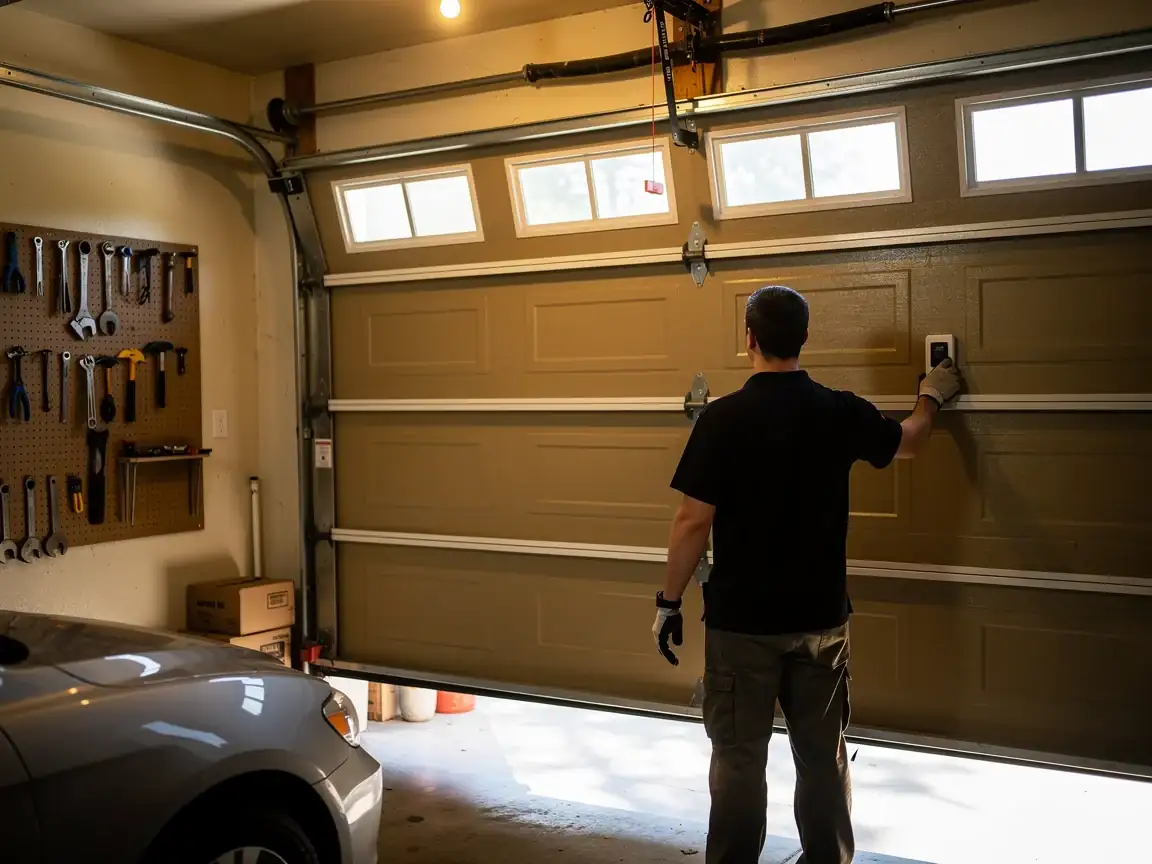
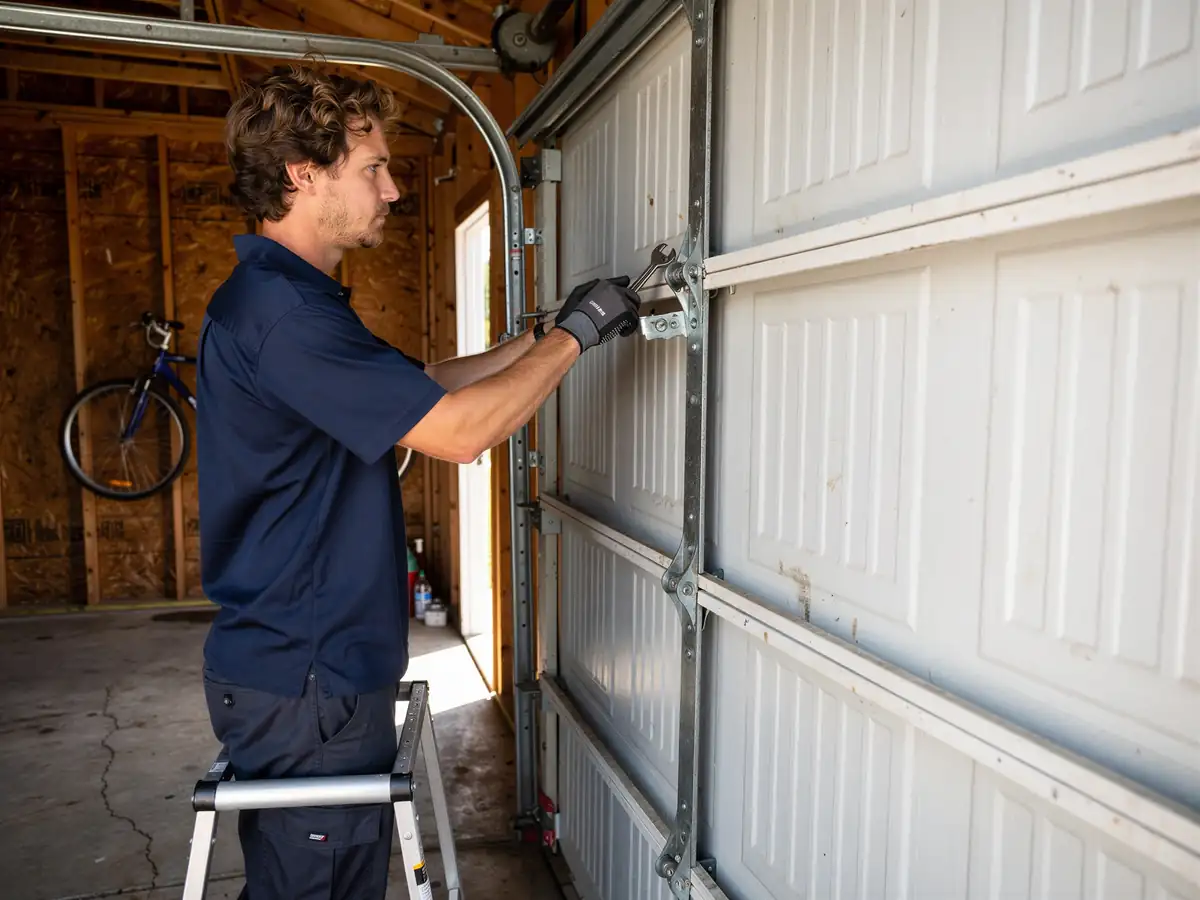
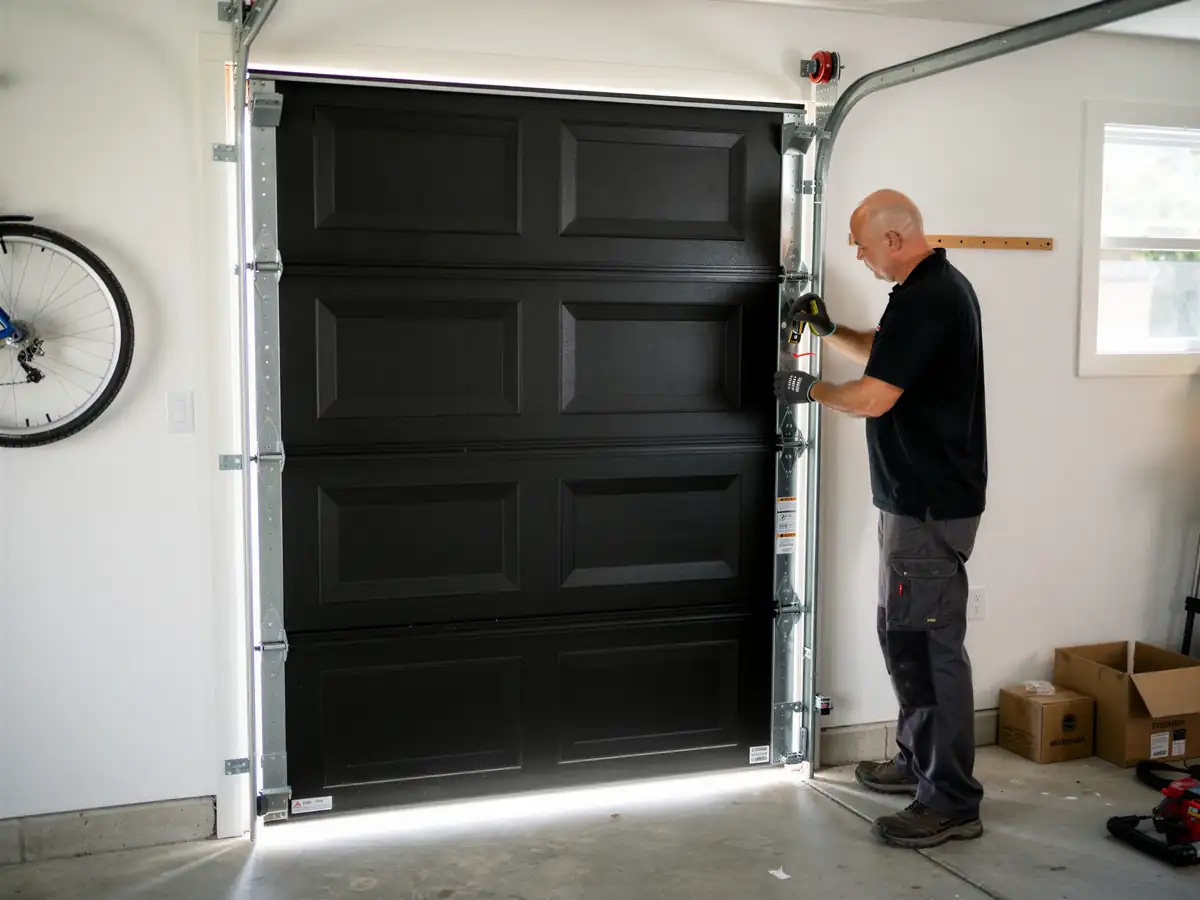
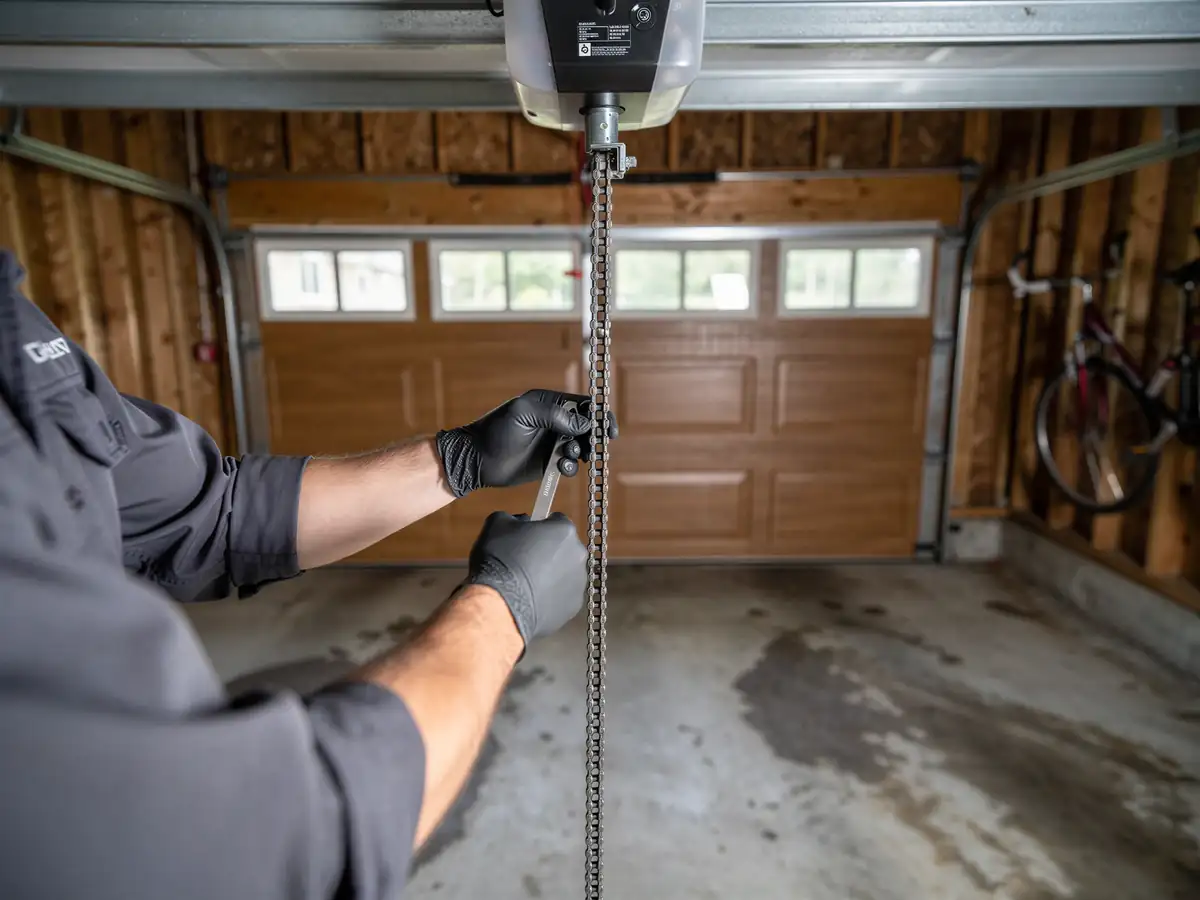
Most opener calls split into two buckets: a part swap on the existing unit, or a full opener replacement when the board, motor, and gear are all past the point of individual fixes. We diagnose on site - plug the unit in, run the cycle, check the logic board for visible damage, test the travel and force settings, and look at the drive gear for stripped teeth, which is common once a chain-drive unit hits a few decades of use.
If it's a single failed part - a capacitor, a sensor eye, a wall control - that's a same-visit fix in most cases. If the motor itself is drawing high current or the board is dead, we'll talk through replacement rather than patch a unit that's going to fail again in six months. We don't swap parts on a unit that's clearly at end of life just to collect a smaller invoice; it's not worth your money or our return trip.
Stocked Parts
We carry the parts that fail most on this era of equipment
Wall control stations, safety sensor pairs, drive gears and sprockets for chain-drive units, and logic boards for the common residential brands installed through the late 1980s and 1990s. Those cover the bulk of what breaks on a Blackhawk-era opener.
What we don't carry on the truck is a board for an obsolete or discontinued model
Some units from this period used proprietary electronics that the manufacturer no longer makes. If that's what's in your garage, we'll tell you straight that replacement is the faster and often cheaper path rather than waiting on a part that may not exist anymore.
Booking a Visit
We work Blackhawk from San Ramon, about 3 miles out, so there's no separate branch or crew based in town - just the same technicians making the short drive for the job. When you call, tell us the symptom (motor runs but door doesn't move, door reverses, unit won't respond to the remote) so we bring the right stock part instead of guessing on site.
For the companion repair page covering the wider range of garage door work we do in town, see Blackhawk Garage Door Repair. For opener work specific to San Ramon itself, that's a separate page: Garage Door Opener Repair in San Ramon, CA.
Can You Do This Yourself
Replacing a remote battery, re-syncing a remote to the receiver, or cleaning dust off the safety sensor lenses - those are fine to handle yourself and solve a surprising number of 'the opener won't work' calls. We'd rather you try that first and save the visit fee.
What we don't recommend DIY: opening the motor housing to get at a capacitor or board, or adjusting travel limits on a unit you don't know the history of. Given the median household income here, most owners we talk to would rather pay for a diagnosed fix than spend a weekend guessing at electronics that are, frankly, not built to be user-serviced.