Can You Do This Yourself
Orinda's housing stock centers on 1961
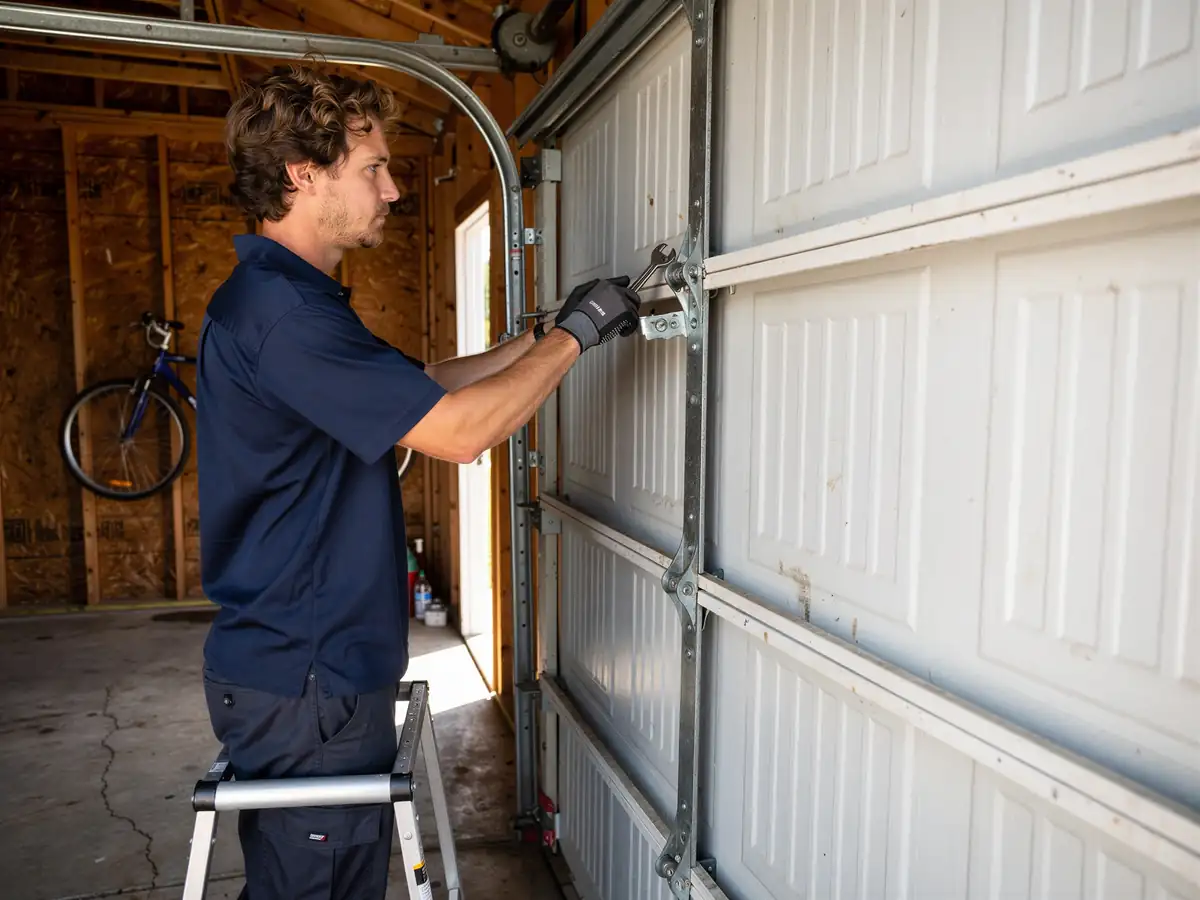
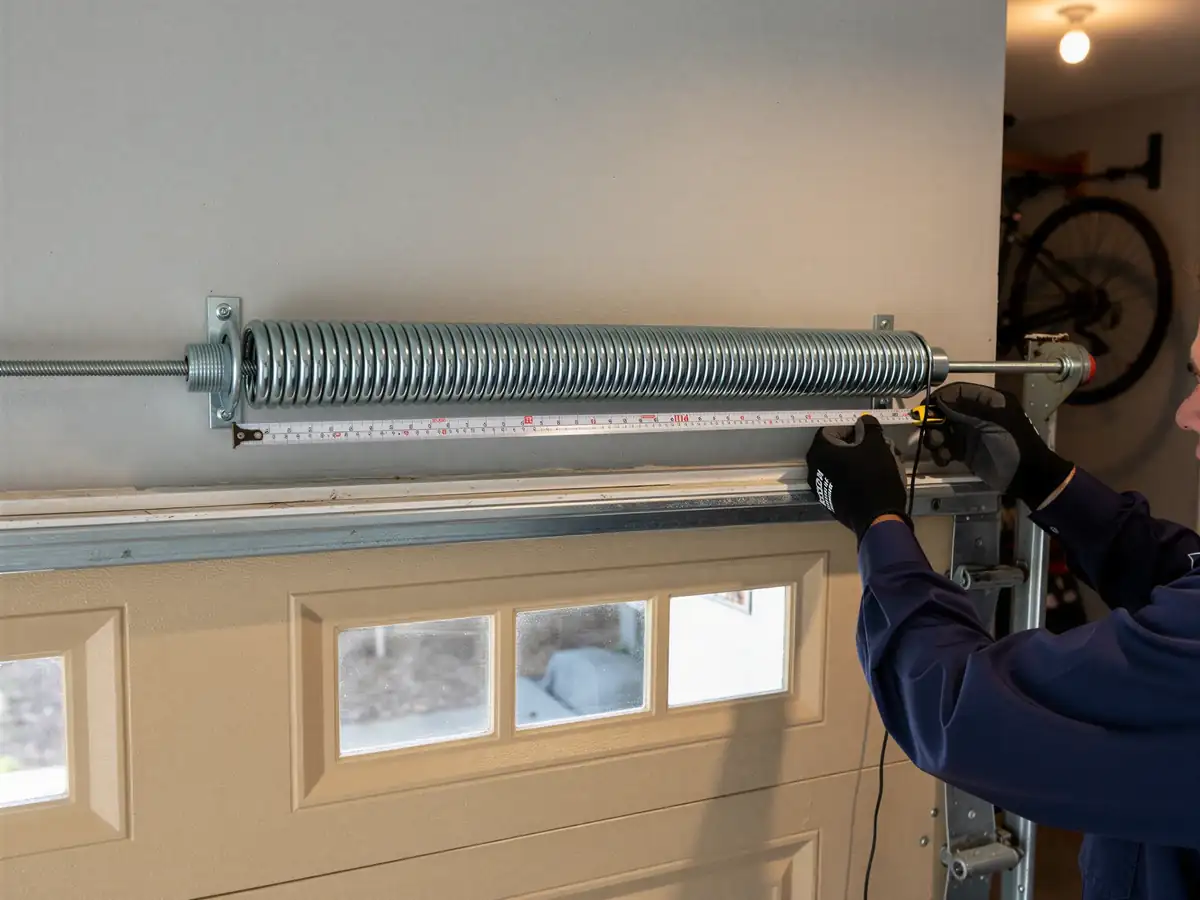
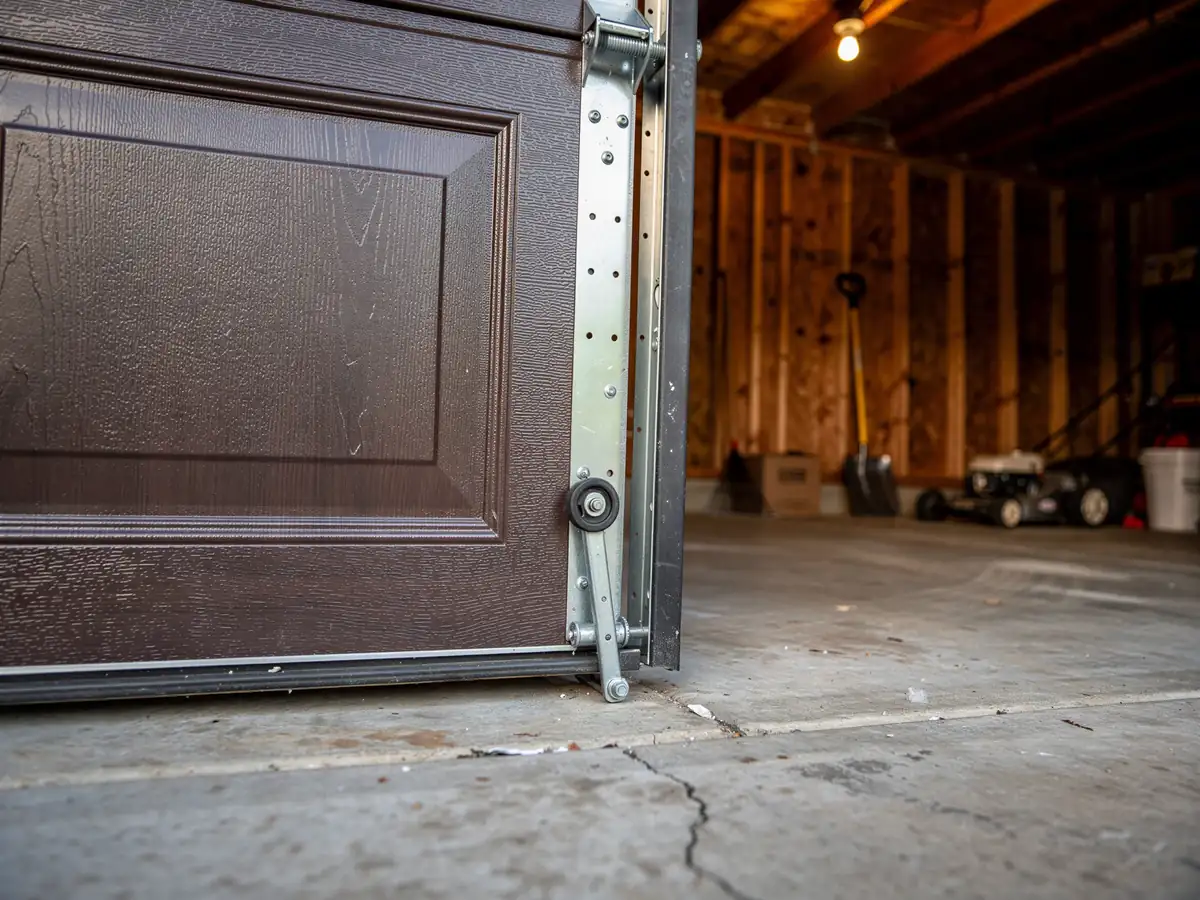
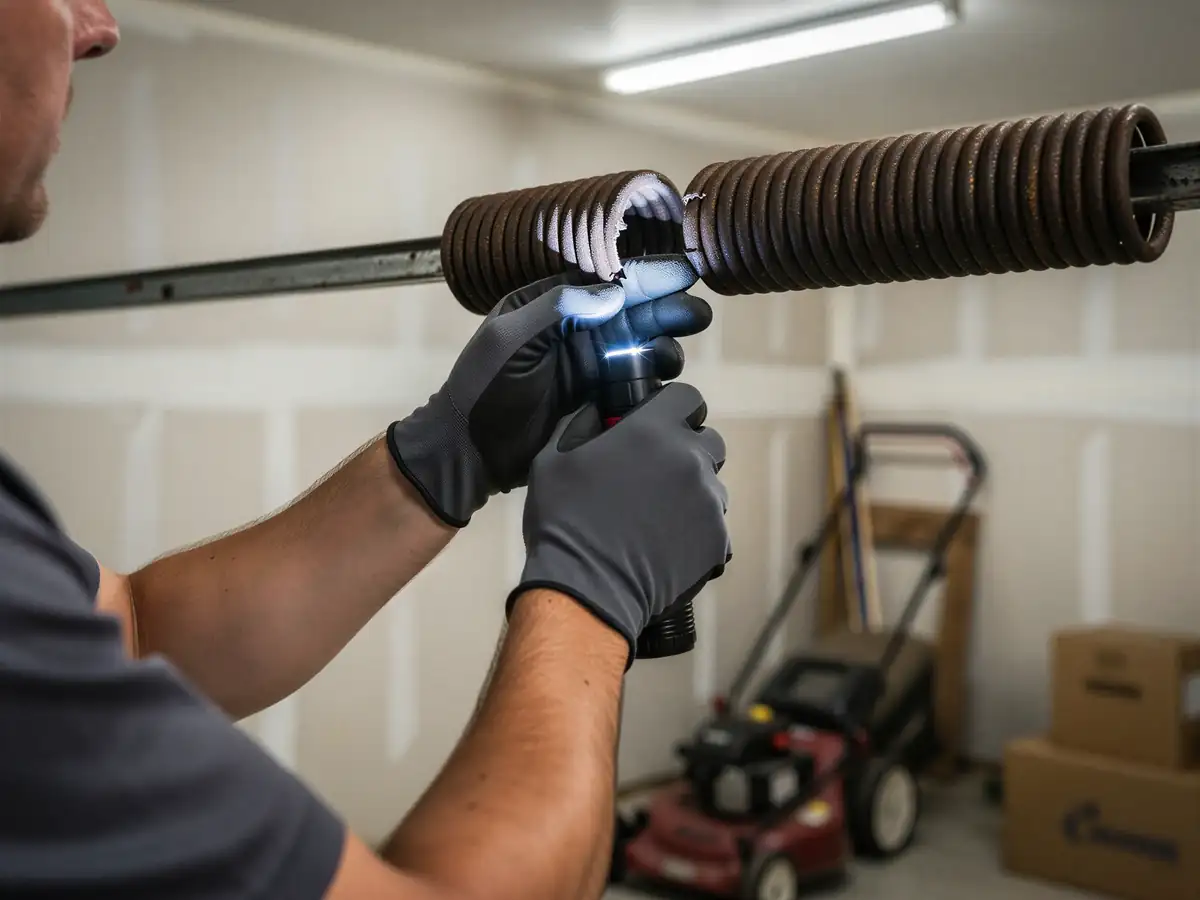
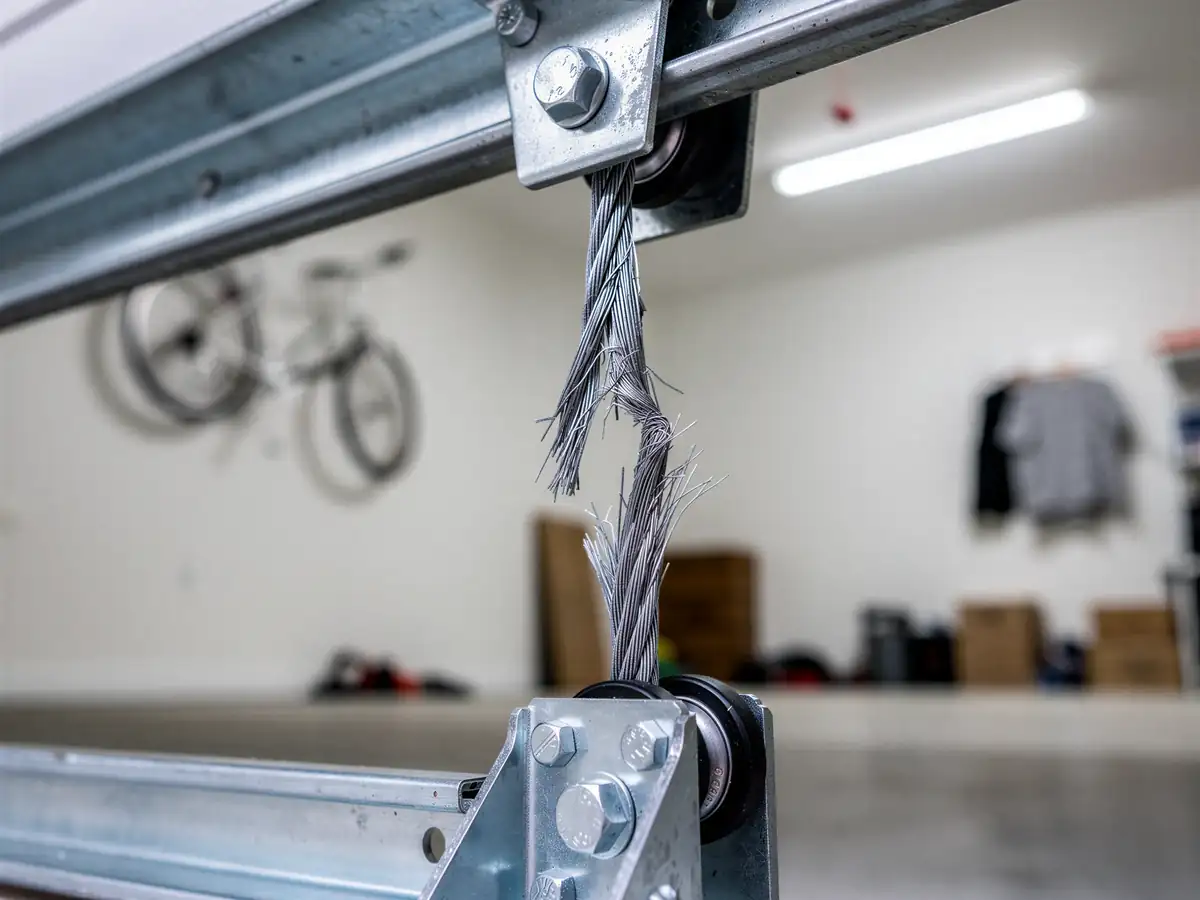
And a door from that build year almost always runs on extension springs with a cable looped through a pulley at the bottom bracket, not the torsion-and-drum setup you'd find on newer construction. That difference matters if you're thinking about doing this yourself. Extension-spring cable is under less stored tension than torsion cable, but it's still enough to put a bracket through drywall or take off a finger if it lets go while you're working near it. The bottom bracket is the part that bites people - it's attached to the section, under spring pull, and it's exactly where the fraying usually starts on a door this age.
If the cable is simply off the pulley and the door is sitting crooked but closed
You can sometimes walk it back manually with the door fully down and no tension on the spring. Past that, we'd rather you call than guess. A cable job on a 60-year-old door frame often turns up a second problem once you're in there - a rusted pulley, a stretched spring, a bracket that's been bent for years - and diagnosing that from a parts-store listing doesn't work. This isn't a sales line, it's just where the DIY math stops paying off on a door this old.
Stocked Parts
We carry standard-length galvanized aircraft cable and the bottom brackets that fit the extension-spring doors common to Orinda's 1961 median build year, since that's the setup we see most on this run. Mild climate with occasional freeze (per the regional climate data) means Orinda's cable failures are almost never weather-driven the way they are in colder markets - what we find instead is decades of use, UV-dried rubber grommets, and pulleys that have worn a groove deep enough to shred cable from the inside out.
What we don't stock on the truck: cable for oversized or custom doors, and odd-length drums for torsion conversions some owners added later. Those get ordered, and depending on the door that can add a day or two before the second visit. We'd rather tell you that up front than have you find out when we're standing in your driveway.
How Long You Are Without the Door
A straightforward cable replacement on one side of a standard double door is usually a same-visit fix once we're on site - the work itself doesn't take long. The bigger variable for Orinda is the trip: San Ramon Garage Door Pros covers this address from San Ramon, 15 miles out, so the clock that matters most to you is scheduling the visit, not the repair itself.
If both cables are original to a 1961 door and one has already gone, we'll generally recommend replacing both while the door is apart rather than waiting for the second one to fail on its own schedule. That's a slightly longer job than a single-cable swap, but it avoids a second 15-mile trip for the same underlying problem a few months later.
The Symptom
On doors from Orinda's build era, a cable failure rarely announces itself with a loud snap
More often it's the door starting to hang crooked, dropping faster on one side as it closes, or a visible fray near the bottom bracket that's been getting worse for weeks before it finally lets go. Some owners notice the door binding in the tracks first - that's the cable slipping off its pulley groove, not yet broken, but close.
If the door drops suddenly and won't move at all, don't force the opener
On an extension-spring door, a broken cable combined with a weak or broken spring on the other side can let a section fall unevenly, and running the opener against that can bend the track or strip the drive gear. Shut the opener off at the wall and leave the door where it is until someone can look at it.
Where This Job Goes Sideways
The complication we run into most in Orinda isn't the cable itself - it's what's holding it. On a door built around 1961, the galvanized hardware has usually never been replaced, and pulling a worn cable off a rusted pulley or a bent bottom bracket can crack 60-year-old wood or metal that was never meant to be disturbed again. What looks like a cable job on the phone sometimes turns into a bracket and pulley job once we're actually under the door.
The other thing that complicates scheduling: with households here reporting median income well above the broader service area, we see more owners asking for full extension-spring-to-torsion conversions rather than a like-for-like cable swap, since torsion hardware holds up longer and is easier to service down the road. That's a reasonable call on a door this old, but it's a different scope and price than a straight cable repair, so we'll always tell you which one you're actually looking at before we start.